

Fanatec has finally, after seven years, produced a genuine successor to the Podium DD1 and DD2. That may sound like a simple statement, but in this market, seven years is almost a generation. Back in 2019, the DD1 and DD2 were still the benchmark for high-end direct-drive sim racing. Since then, the landscape has shifted completely. Among others, MOZA, Simagic and Conspit made direct drive more accessible and more competitively priced, Simucube remained the benchmark for those seeking maximum finesse, and Asetek established itself as a serious challenger with its own ecosystem. Meanwhile, Fanatec stood still for too long with a range that was once ahead of its time but slowly lost its lead.
The new Fanatec Podium DD (25 Nm) wheelbase is therefore more than “another new flagship”. This is Fanatec looking to compete at the top end of the market once again, and they do so with a different emphasis than just brute force. The focus is on holding torque and dynamic range, thermal stability and cleaner force feedback signal. FullForce positions them as an extra layer of detail on top of the classic force feedback signal - provided your sims support it.
At the same time, this release cannot be viewed in isolation from what was happening behind the scenes. Fanatec went through a turbulent period and was acquired by the American company Corsair in 2024 via an asset deal. Moments like these can either break a brand or force it to refocus. In that sense, the Podium DD is the first concrete proof that Fanatec wants to move forward again: not just by showcasing new hardware, but above all by regaining trust with a product that has to deliver in practice.
And that naturally leads us to the question that, for me, is more important than the Nm figure. It’s not: is 25 Nm impressive? It is. The question is: does the Podium DD give you more control and confidence, or are you mainly buying an impressive figure on paper? And is the Podium DD the new flagship that will finally allow Fanatec to look to the future again? Let’s find out!
Summary
Snel naar
The Fanatec Podium DD wheelbase is Fanatec’s new 25 Nm flagship model, designed to deliver headroom, thermal stability and a clean force feedback signal within the QR2 ecosystem. The 10 cm shaft extension is useful for monitor positioning. FullForce can add extra detail, but remains dependent on game support. Its added value hinges on a rigid rig and a deliberate choice of ecosystem.
Highlights
- 25 Nm holding torque is mainly about headroom and quietness, not about steering “harder”.
- The QR2-native and the included 10 cm shaft extension are more practical than they sound.
- FullForce can add value, but remains dependent on game support.
- Value depends on your total setup: rig rigidity, ergonomics, and ecosystem.
- No PlayStation compatibility; Xbox works via an Xbox-licensed Fanatec controller.
Fanatec Discount Code
The question behind the numbers
Specifications are easy. Especially in sim racing. Every manufacturer can boast impressive figures these days. 20 Nm, 23 Nm, 25 Nm, 33 Nm peak. It all sounds spectacular, but to be honest, I'm becoming less and less impressed by it. Not because it isn't important, but because in the cockpit, you want to know something else. Does this base give me more confidence? Do I feel what the car is doing sooner? Can I drive longer without it becoming tiring or messy? And perhaps more importantly: am I paying for real added value here, or mainly for a margin that I barely use in practice?
That is exactly what this review is all about. It’s not just about whether the Fanatec Podium DD is powerful, because the answer to that is fairly straightforward. Of course it’s strong. The better question is whether this wheelbase is good enough, refined enough and logical enough to be seriously considered in the high-end segment by 2026. And during testing, I actually became increasingly critical on this point, precisely because the base is convincing in so many respects.
My test setup
I didn’t just test the Fanatec Podium DD briefly on a temporary setup, but used it for a good two to three months in my permanent test cockpit. This consists of a Sim-Lab P1X Ultimate, XP1 pedals, an MSI 49” OLED ultrawide and Pimax Crystal Super. For this review, my Simucube 2 Sport has temporarily taken a back seat. Not because that base is suddenly no longer good enough, but precisely because I know it inside out. As a result, I quickly sensed where the Podium DD differs. The Simucube feels direct, pure and fairly neutral. The Podium DD feels a bit more like the Fanatec: more integrated, more accessible and slightly less raw. But no less serious.
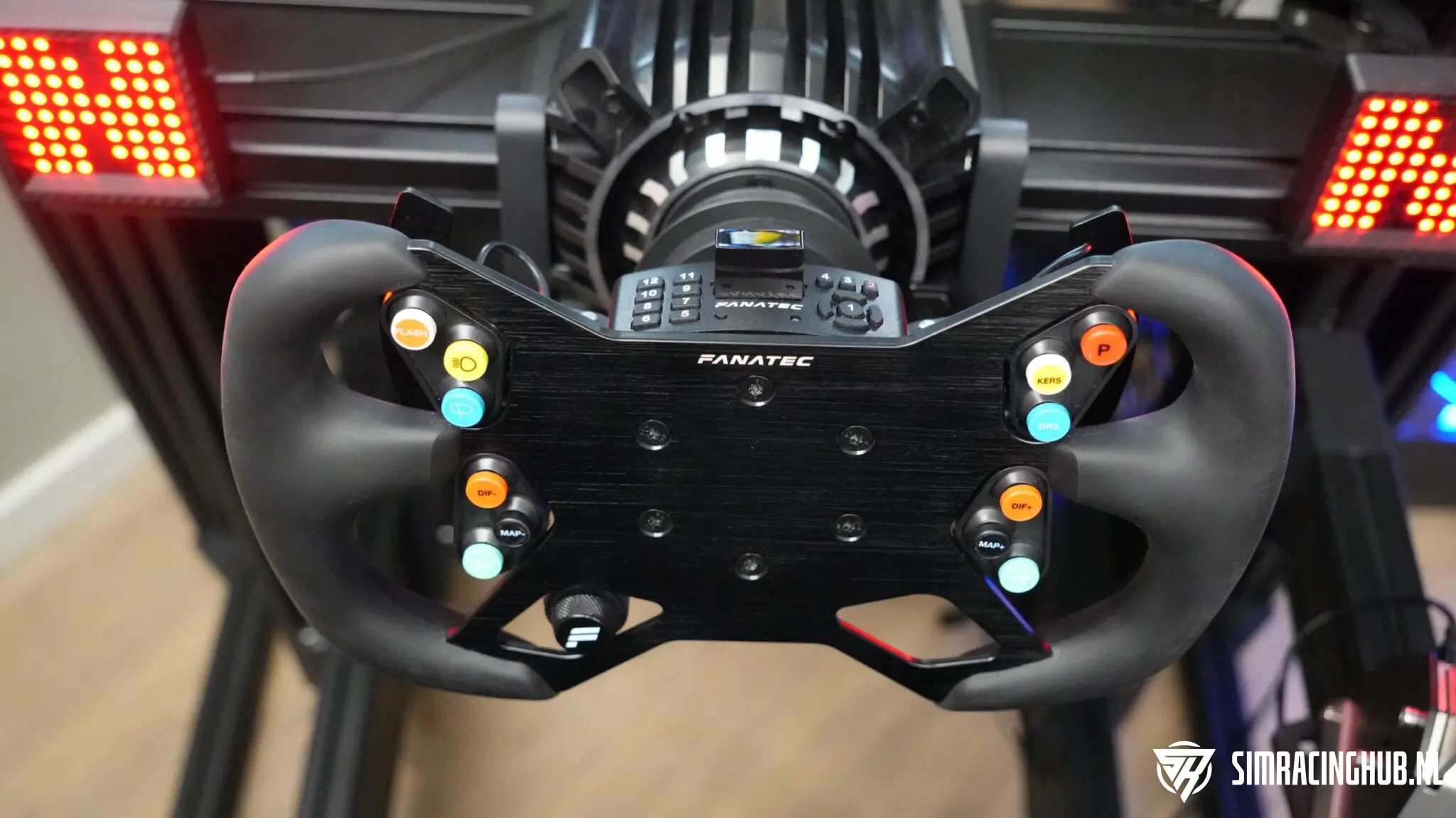
I tested the base with the Fanatec Podium Rally Button Module, the ClubSport GT3 Wheel Rim and the ClubSport Hub V2. The Fanatec Handbrake V2 was also part of the setup, as I wanted to see how mature the ecosystem feels in everyday use. In terms of sims, I mainly drove in iRacing, Automobilista 2, Le Mans Ultimate, RaceRoom, Assetto Corsa Rally and EVO.
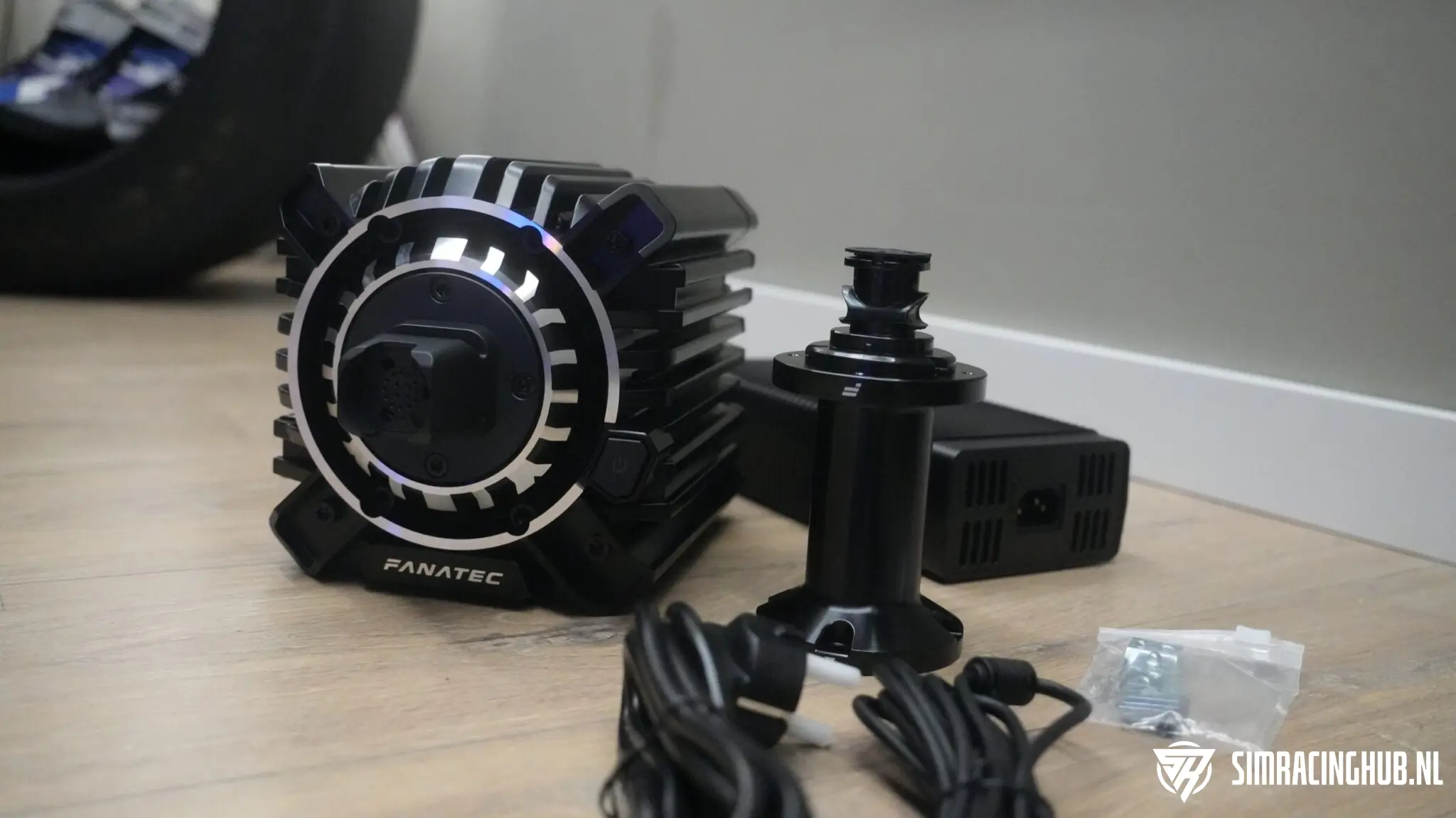
Unboxing and first impression
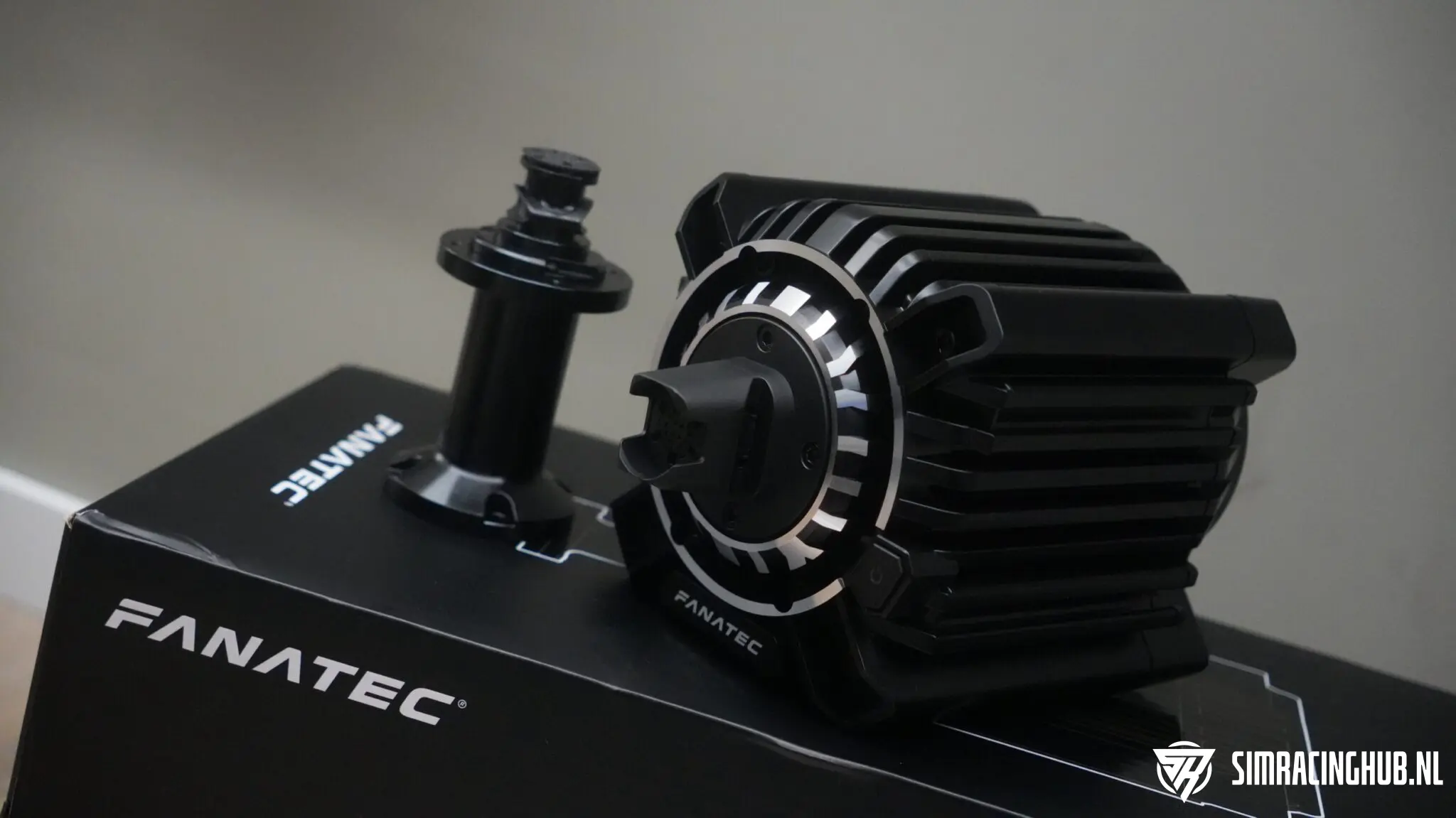
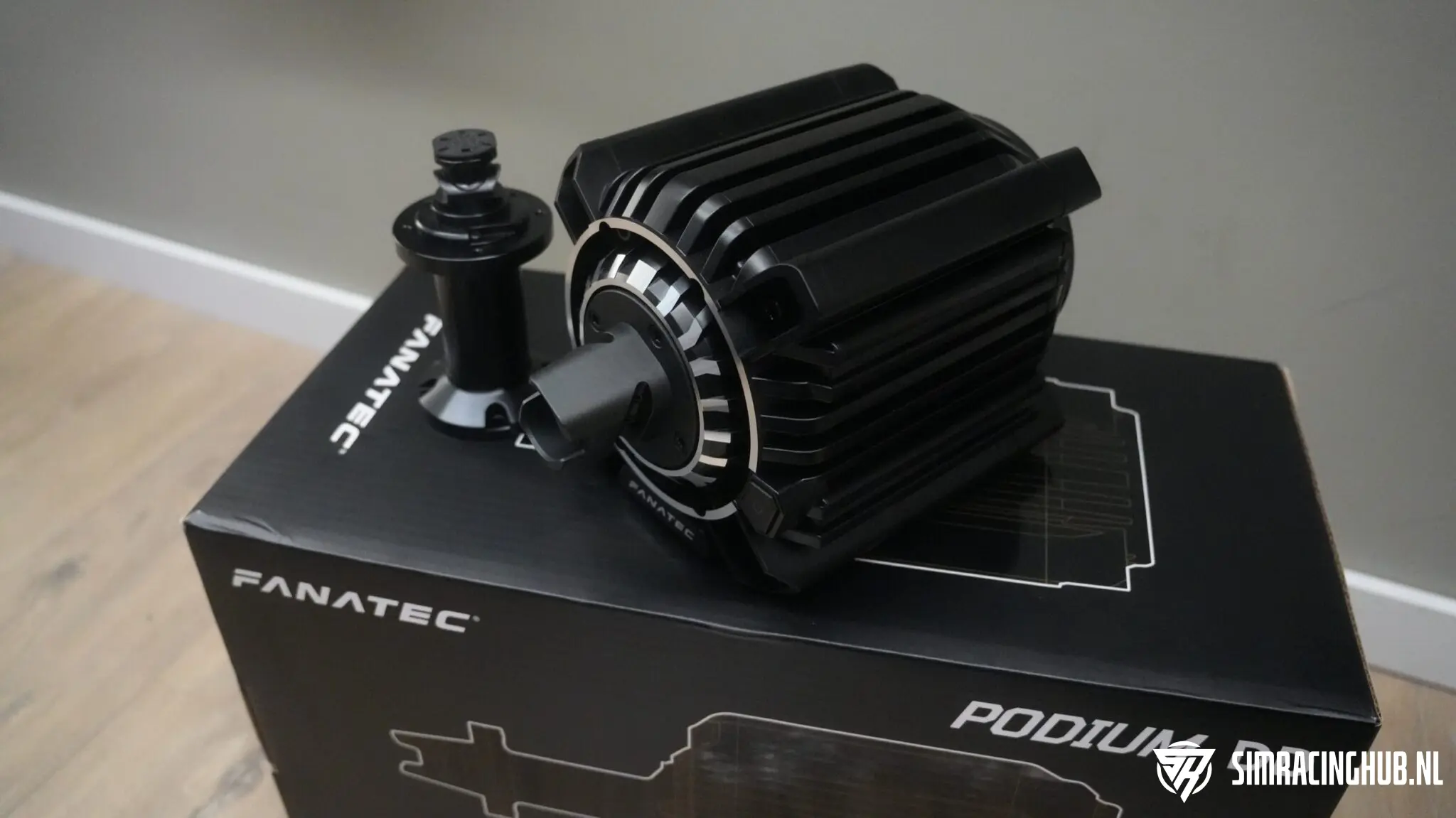
I always pay attention to how a product is presented. That’s partly down to my marketing mindset, partly just enthusiasm. With a Podium product, you expect Fanatec to have the presentation spot on, and that’s certainly the case here. The box feels sturdy, sleek and premium without being overly flashy. Everything is neatly arranged, the packaging provides good protection, and the lock/unlock mechanism is one of those little details that makes unboxing feel just that bit nicer.
In the box you will find the following:
- Podium DD base
- QR2 base-side (pre-assembled)
- Power supply + mains cable (regional)
- USB cable (Type-C to Type-A)
- 4x T-nuts for the rail mount system
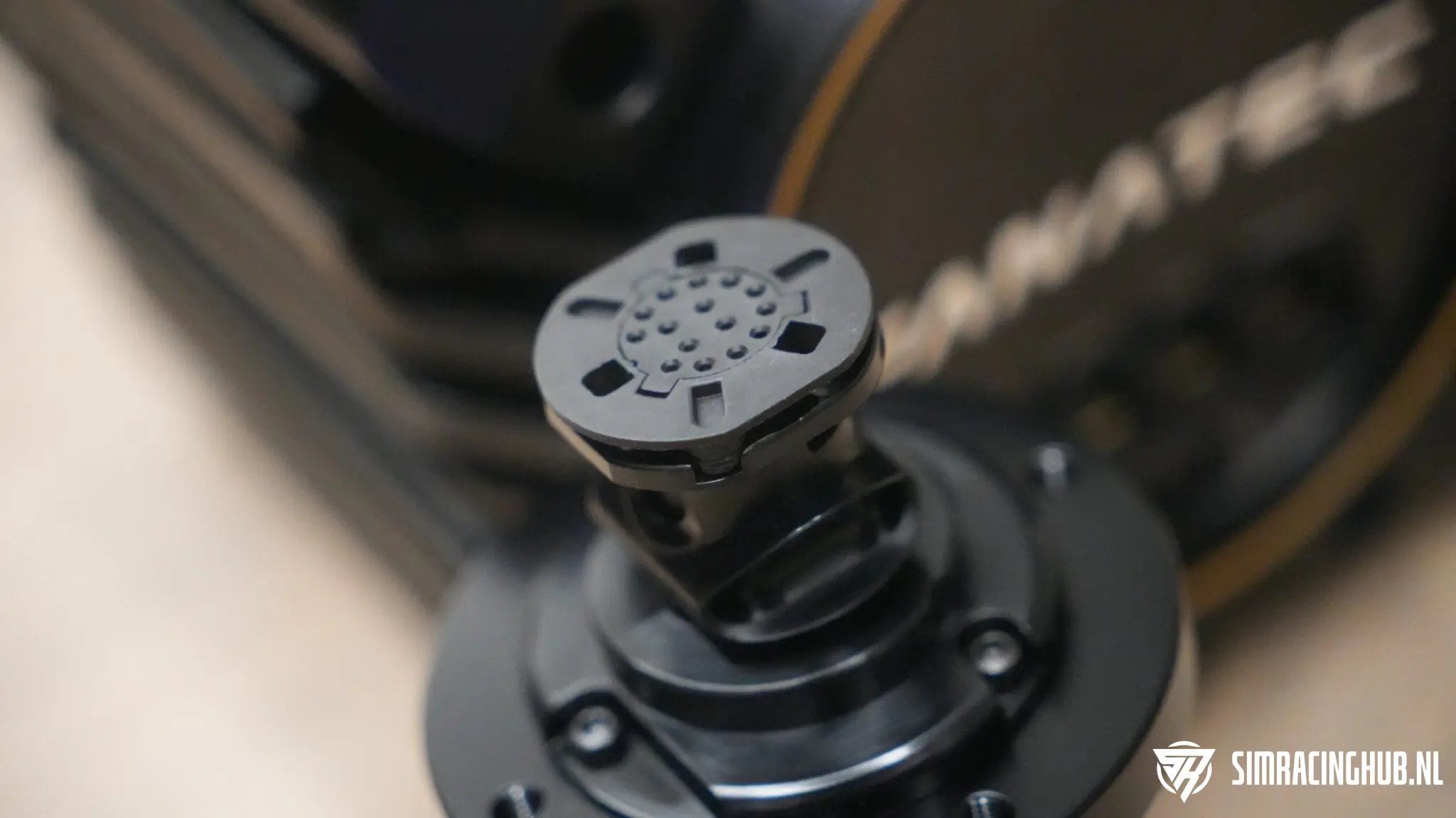
- 10 cm shaft extension
- 4 mm Allen key
- QR disassembly tool + anchor bolt
- 4 x M5x12 bolts for the montage shaft extension
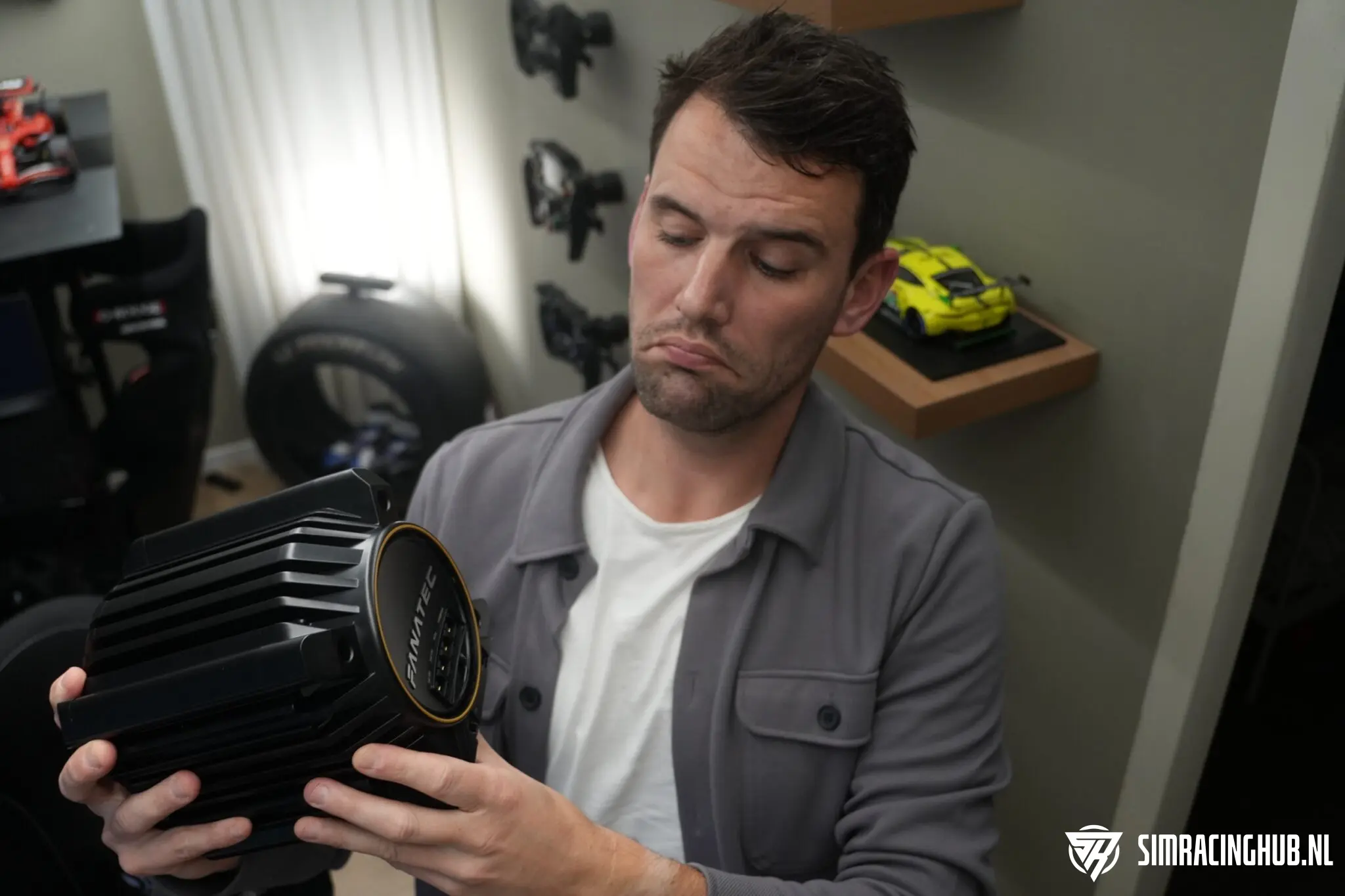
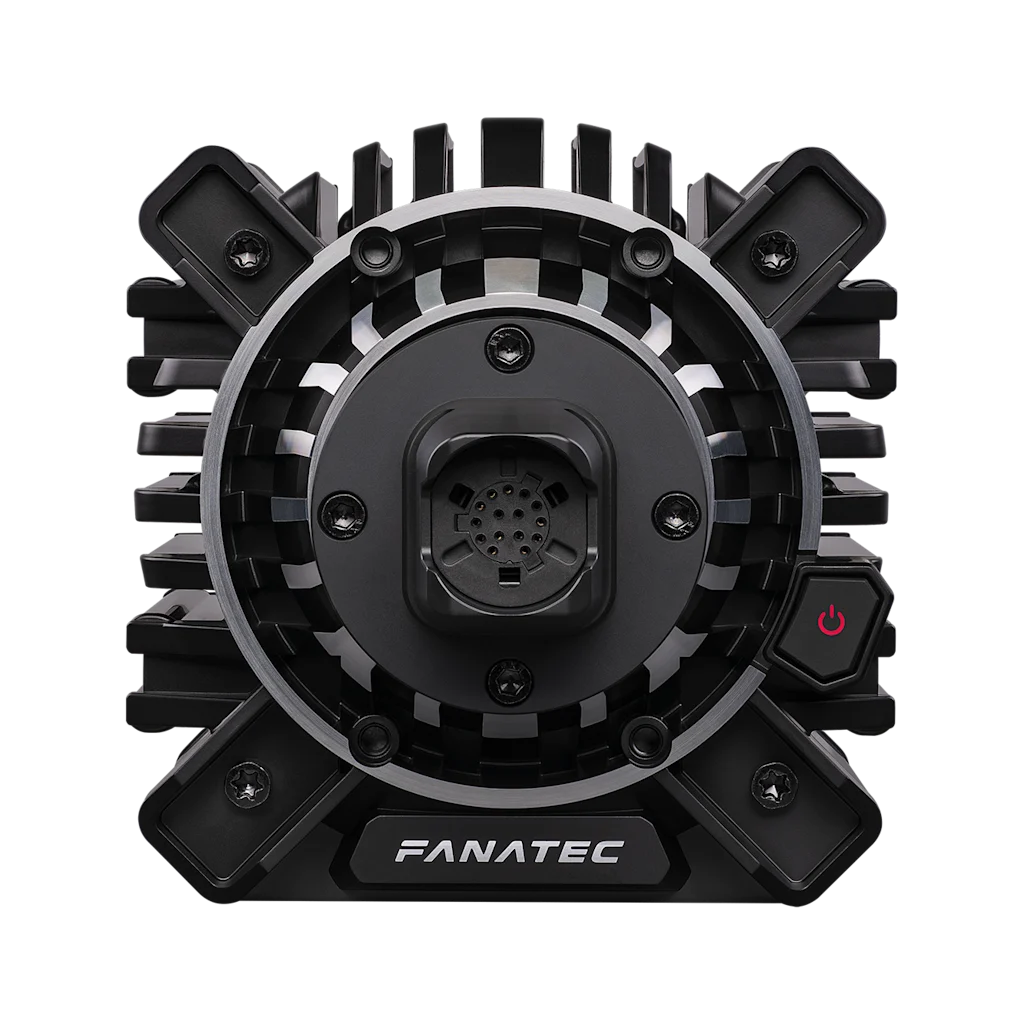
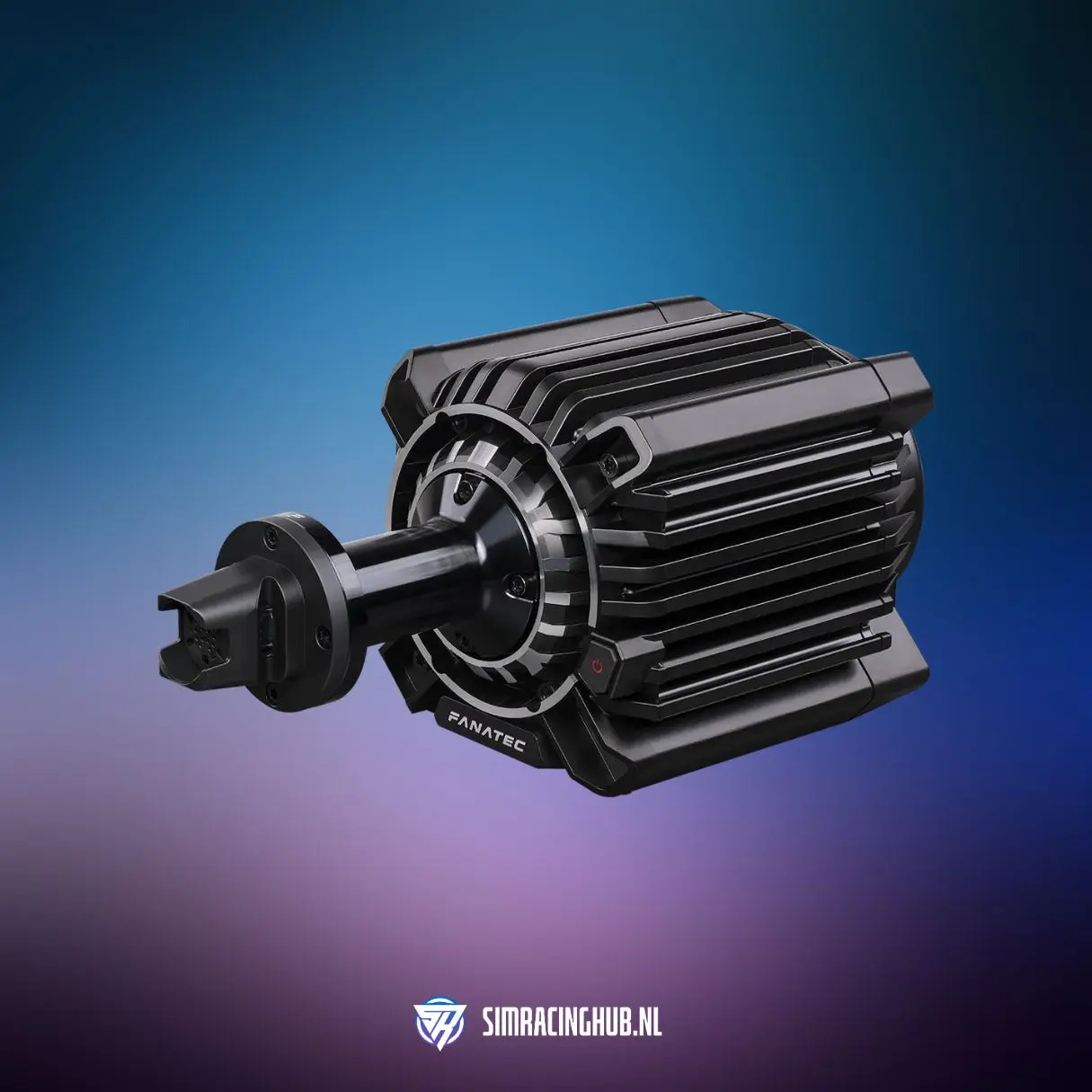
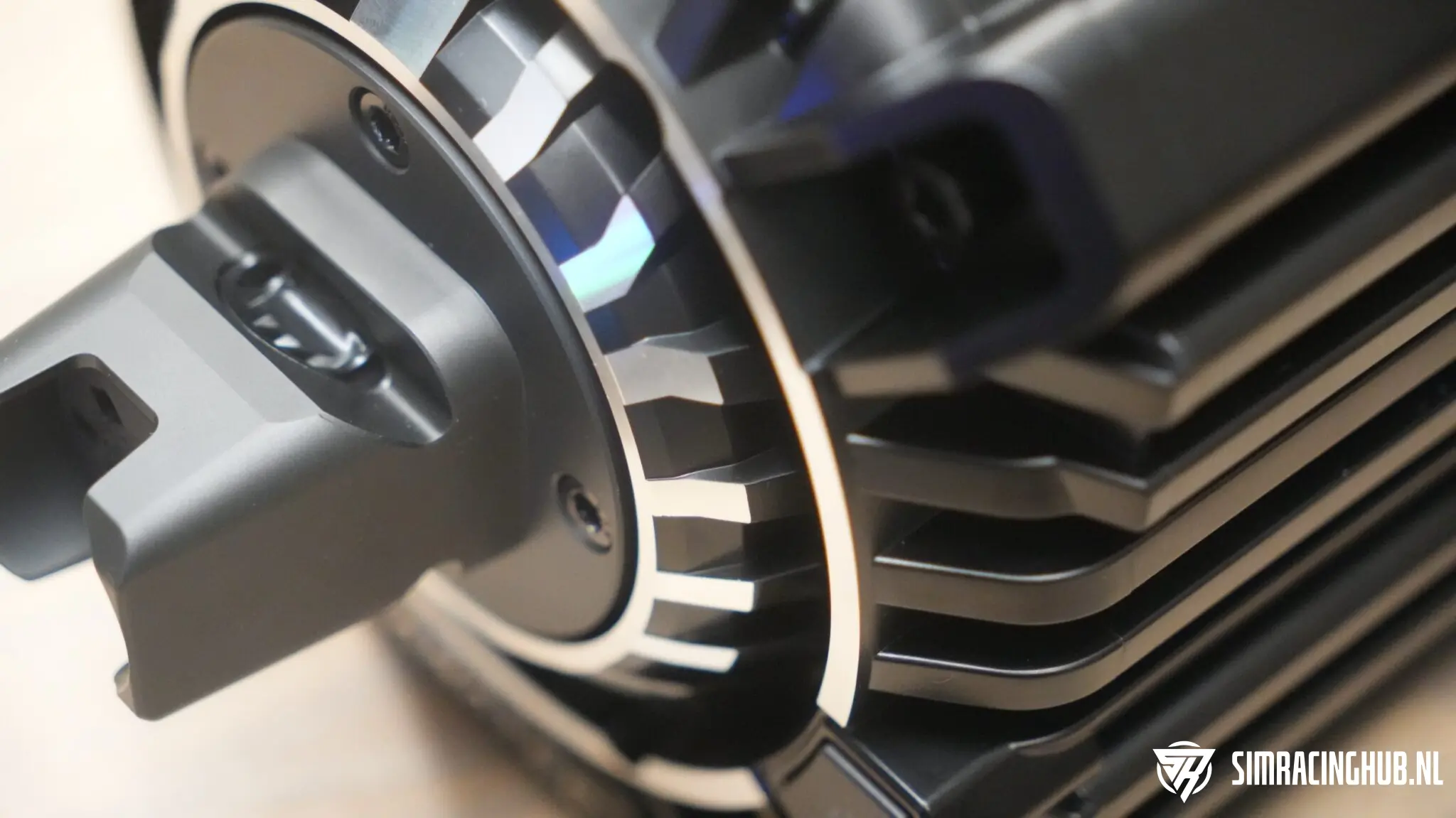
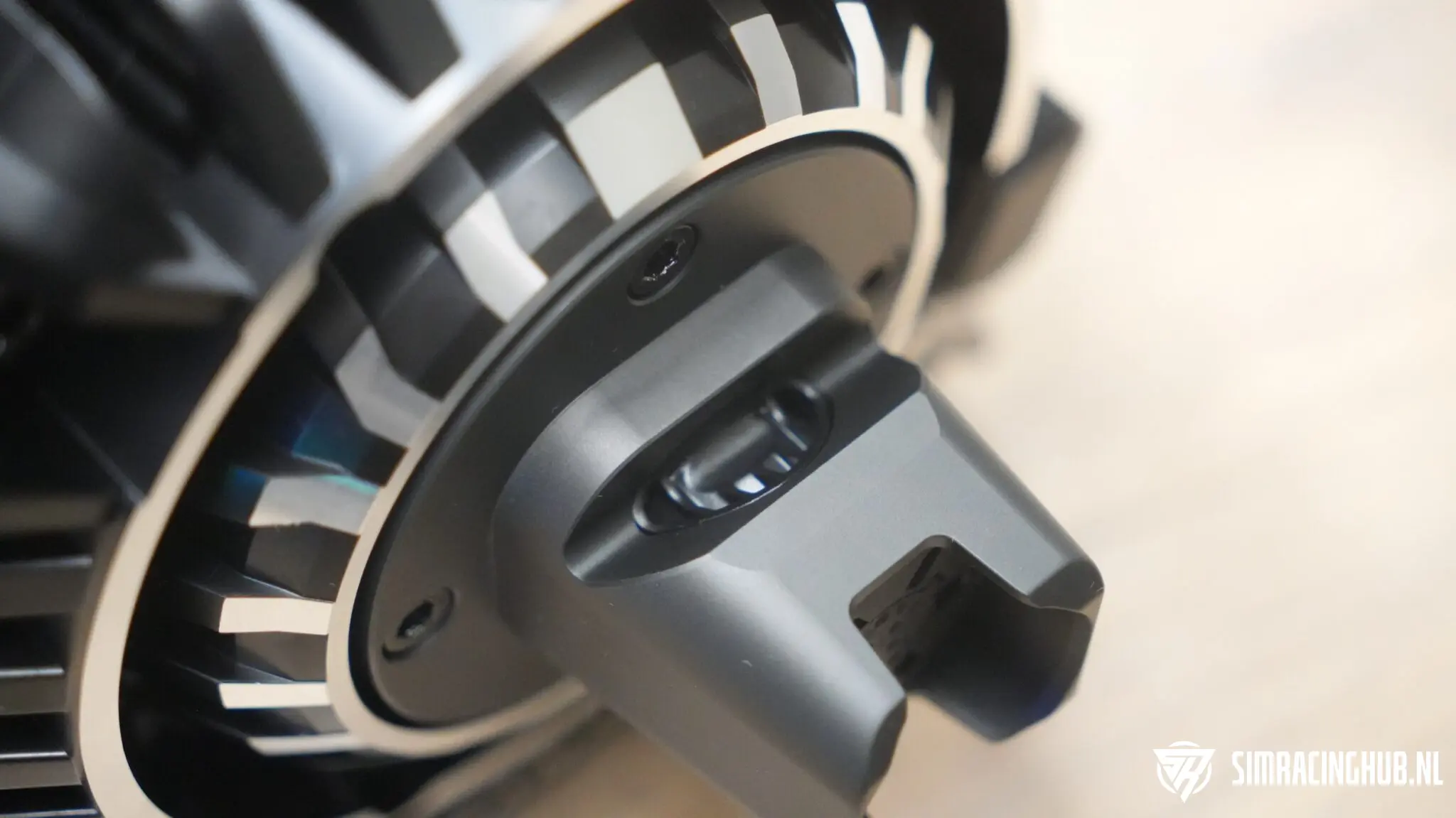
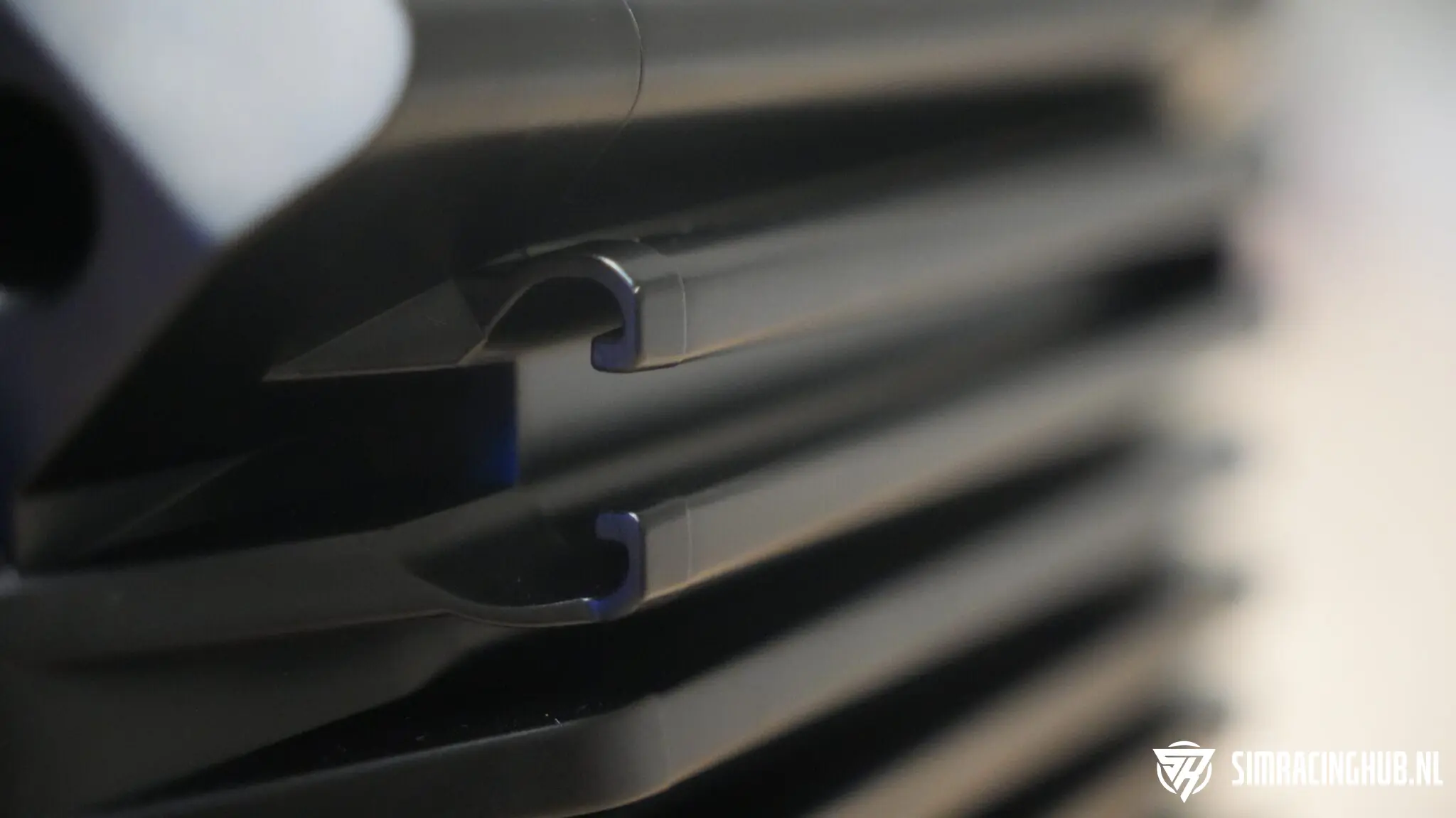
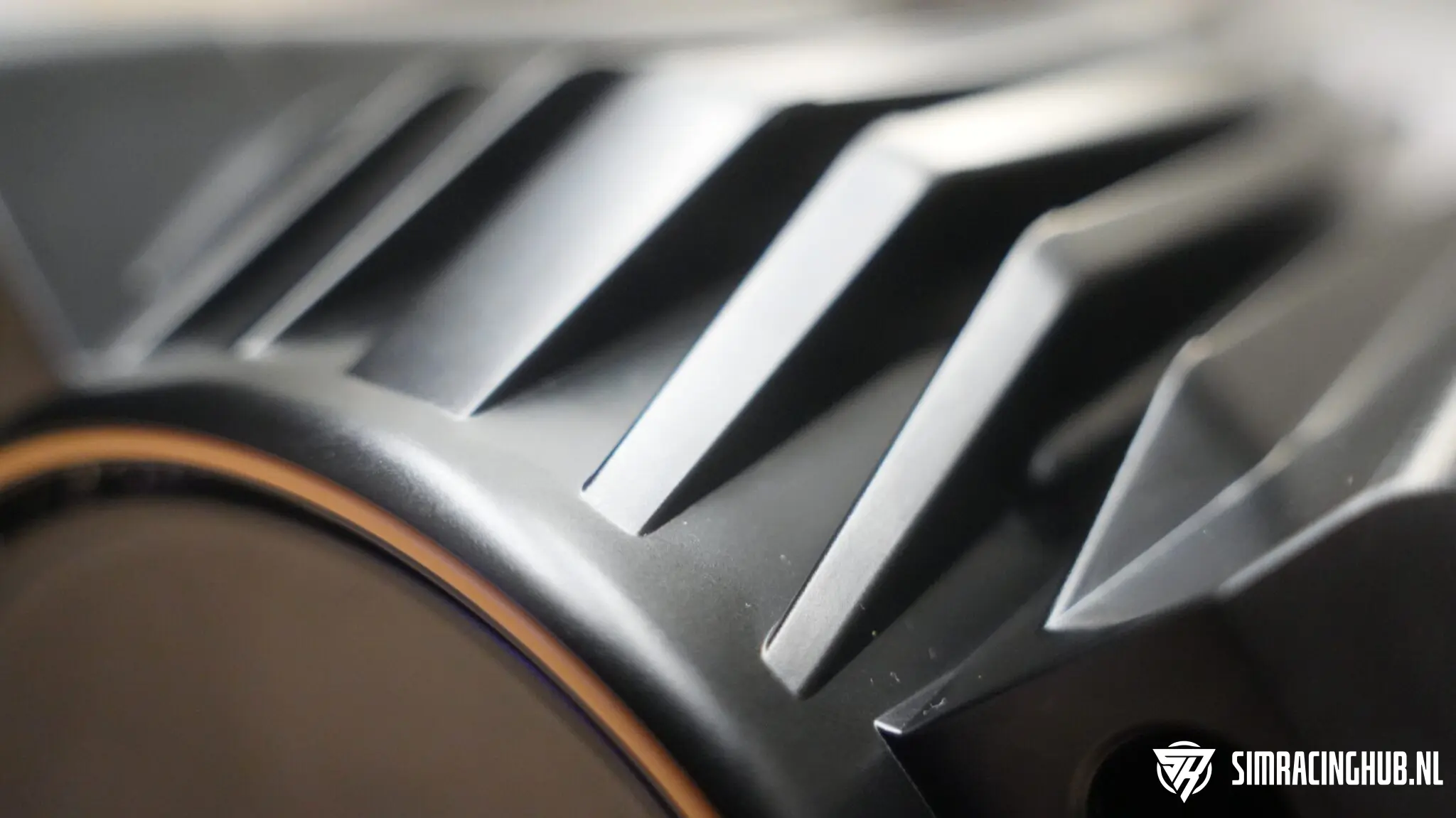
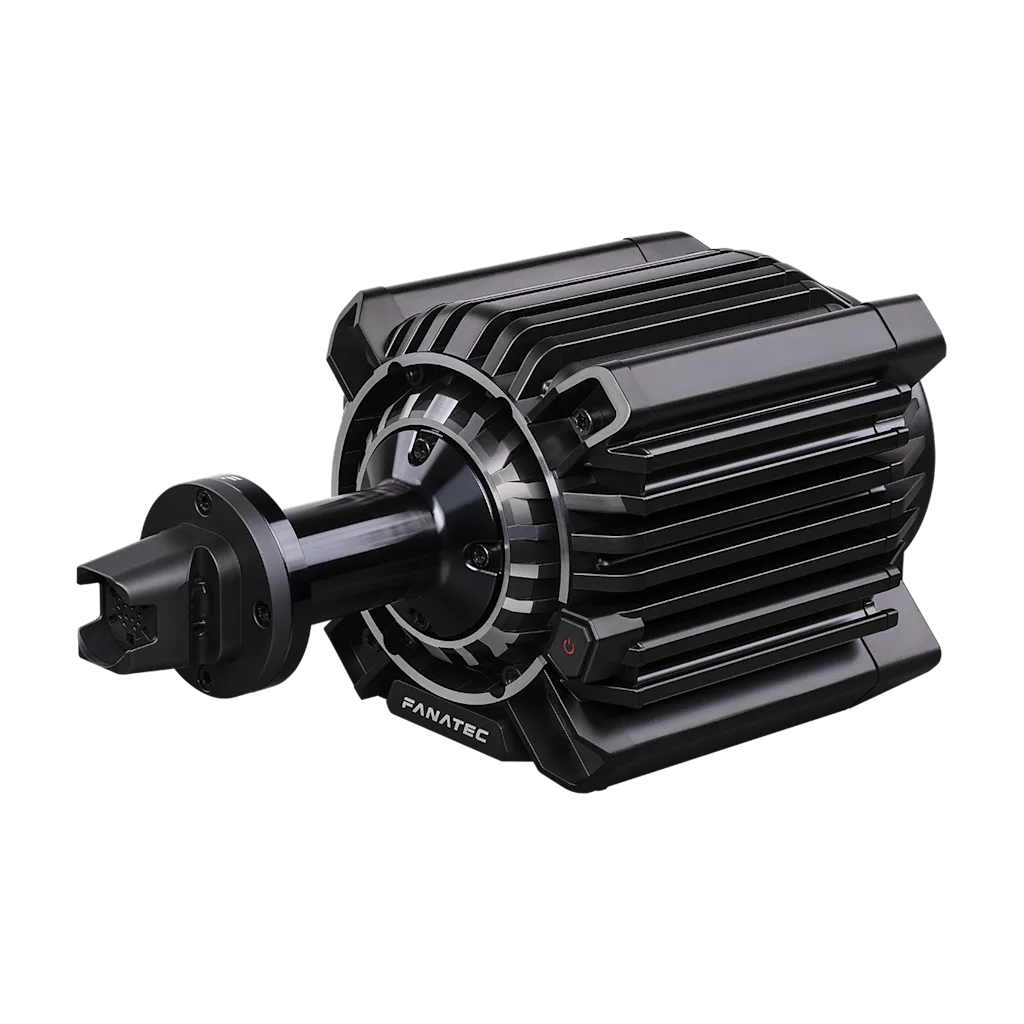
My first impression was mixed. The Podium DD immediately feels high-end: weighty, tightly finished, and built to handle heat and power. The aluminium housing and cooling fins give it a functional, industrial look. At the same time, I found it visually less distinctive than I had hoped. Anyone familiar with the ClubSport DD or DD+ will immediately recognise the same design language. That's not a bad thing, as the design is attractive. But for a Podium flagship, I had expected something more visually distinctive.
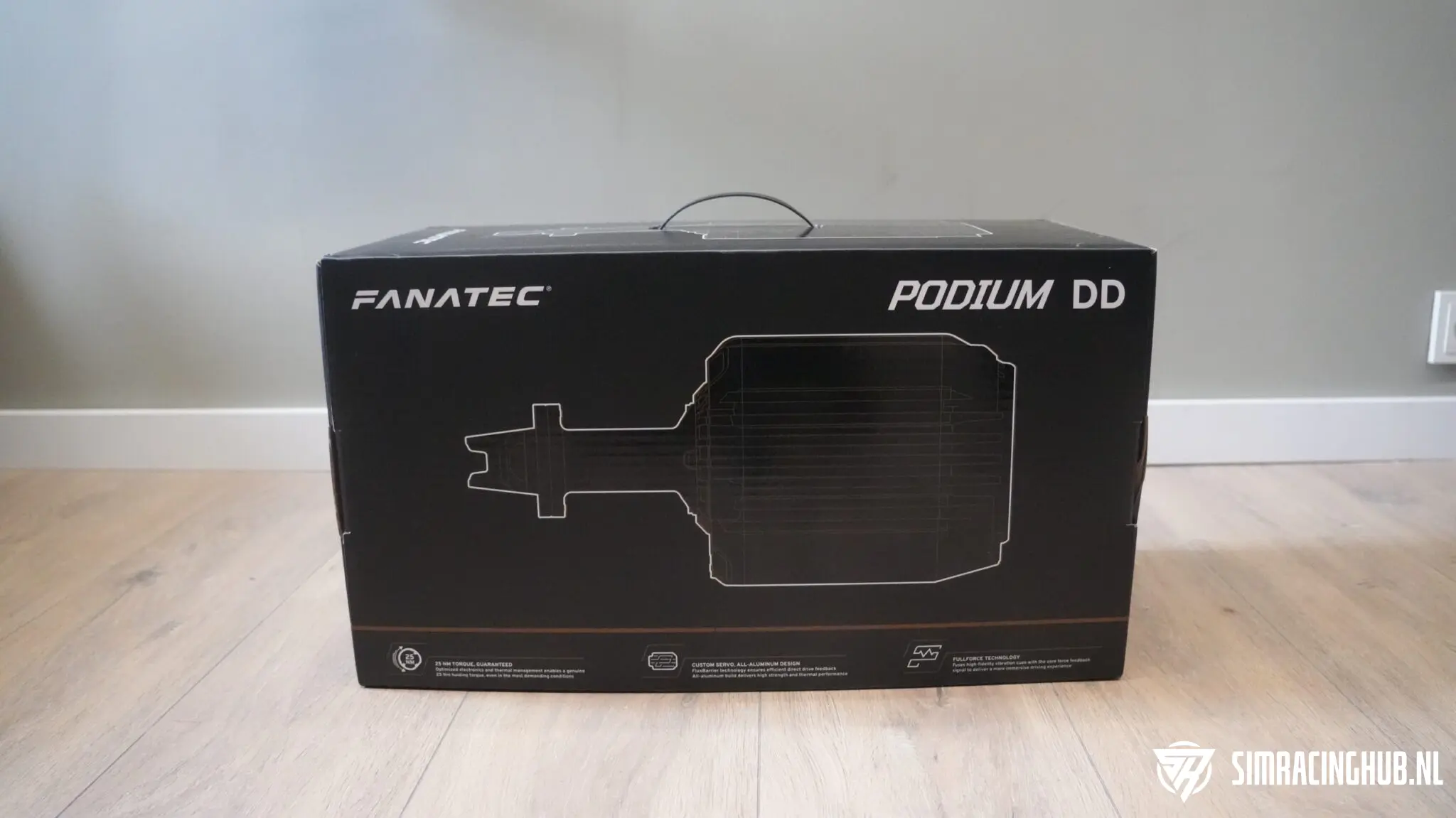
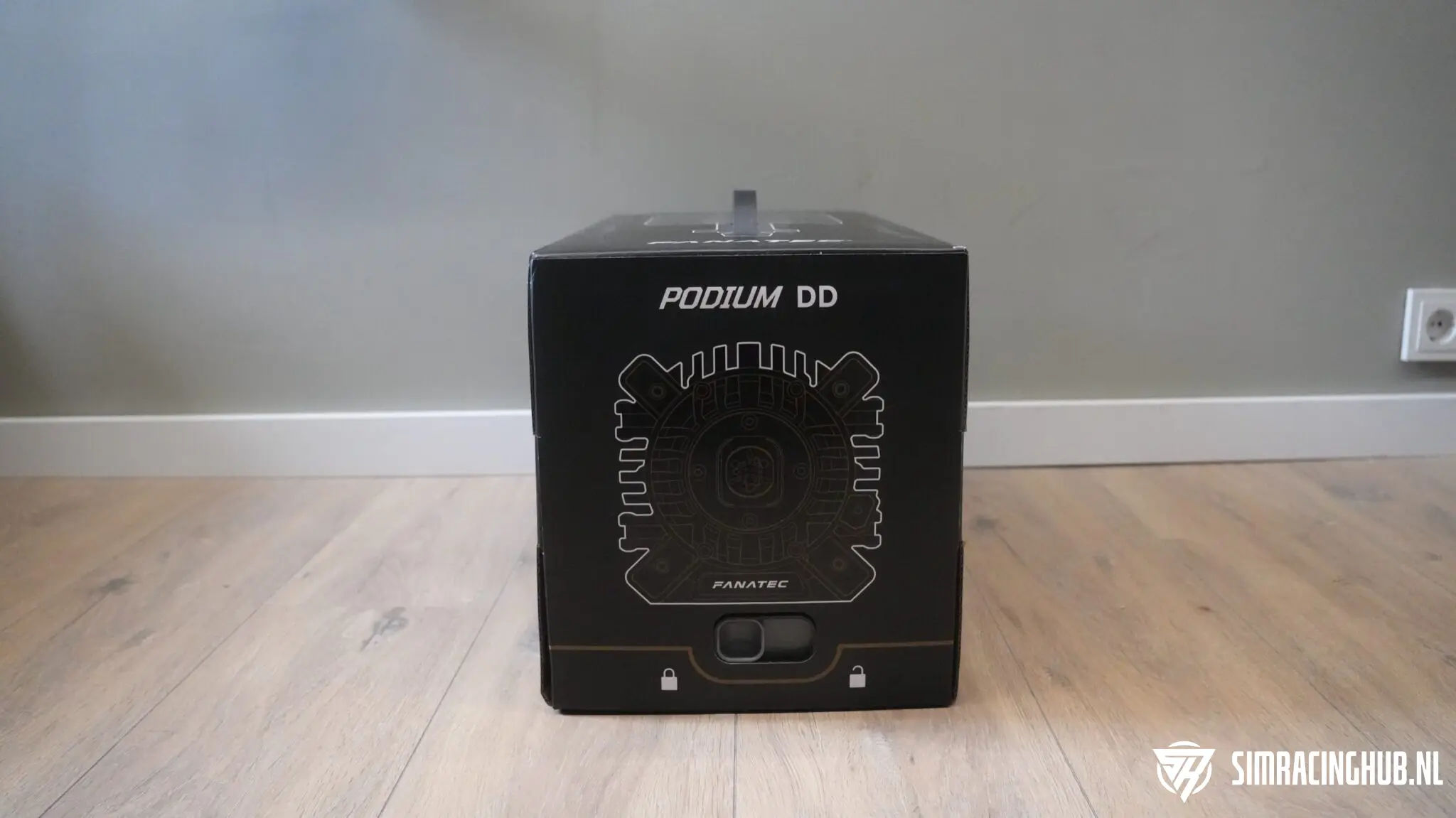
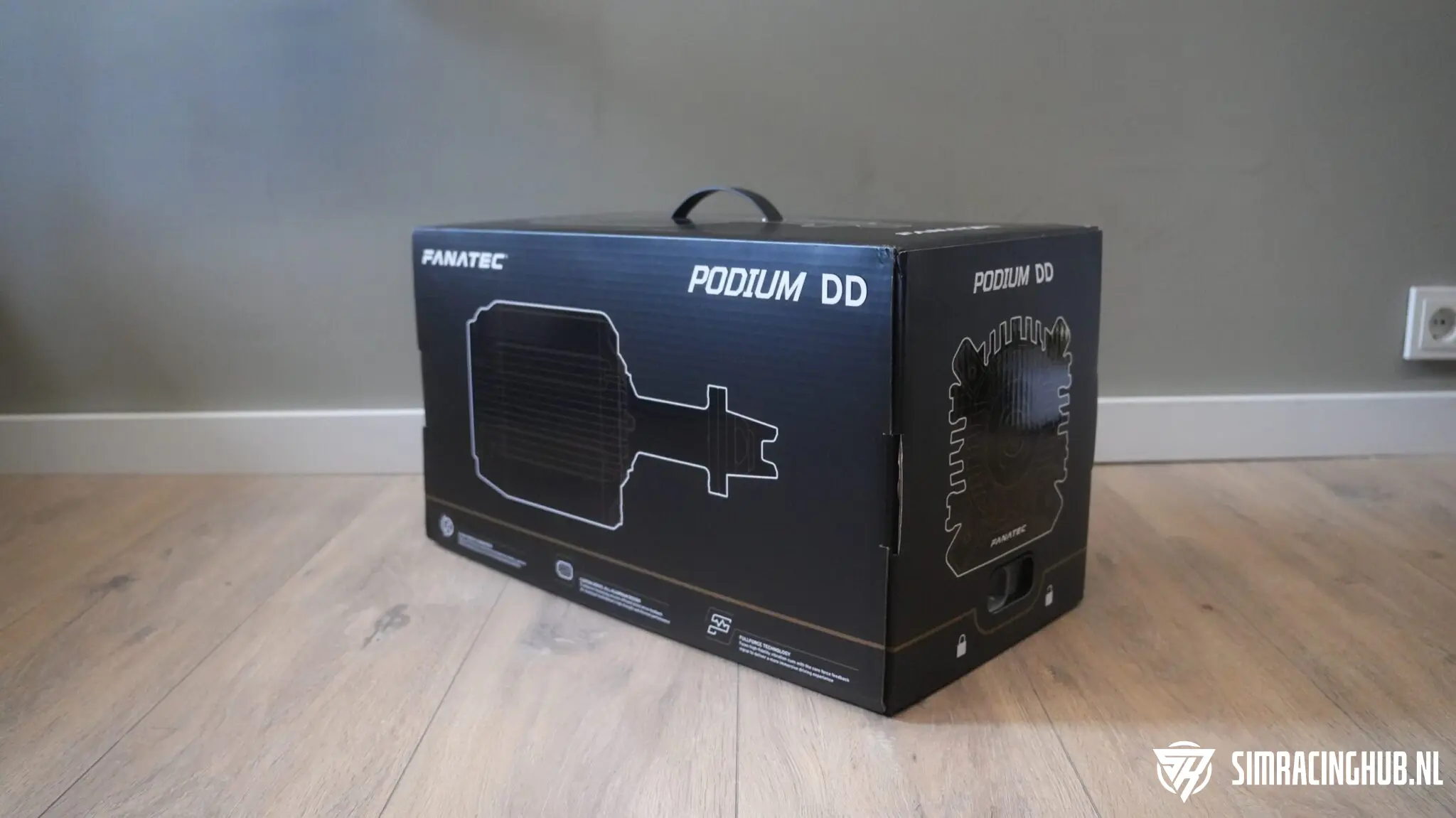
What is the Fanatec Podium DD?
The Fanatec Podium DD is Fanatec’s new high-end direct-drive wheelbase. In practice, it replaces the older Podium DD1 and DD2 ranges and is positioned above the ClubSport DD and ClubSport DD+. With 25 Nm of continuous torque, it clearly sits at the top end of the current direct-drive market. The base is designed for PC use and works on Xbox when using an Xbox-compatible Fanatec steering wheel. PlayStation compatibility is lacking, which is an immediate key difference from the ClubSport DD+.
It is important to note that Fanatec has not simply given an old DD2 a facelift. The housing, internal construction, cooling, electronics and QR2 integration are clearly more modern. Fanatec highlights features including a full metal housing, aluminium motor shaft, aluminium bearing seats, reinforced electronics, a new heatsink design and passive cooling. These aren’t exactly sexy selling points for a product page, but they do say something about the intention behind this wheelbase. This isn’t designed primarily to be small, cheap or accessible. It’s designed to deliver power consistently and stably over the long term.
Specifications
- Torque: 25 Nm holding torque (33 Nm peak overshoot)
- Motor Direct drive servo motor (2nd generation architecture)
- Cooling: passive, with amplified electronics and a large heatsink
- Quick release: QR2 base-side (Type-F) pre-assembled, with cable-free power/data connection to Fanatec
- Rotation up to 2520° (electronically limited, adjustable)
- Position sensinghigh-resolution contactless Hall sensor
- Construction: Full aluminium housing with integrated cooling fins and rail mounting (T-nut rails side/bottom)
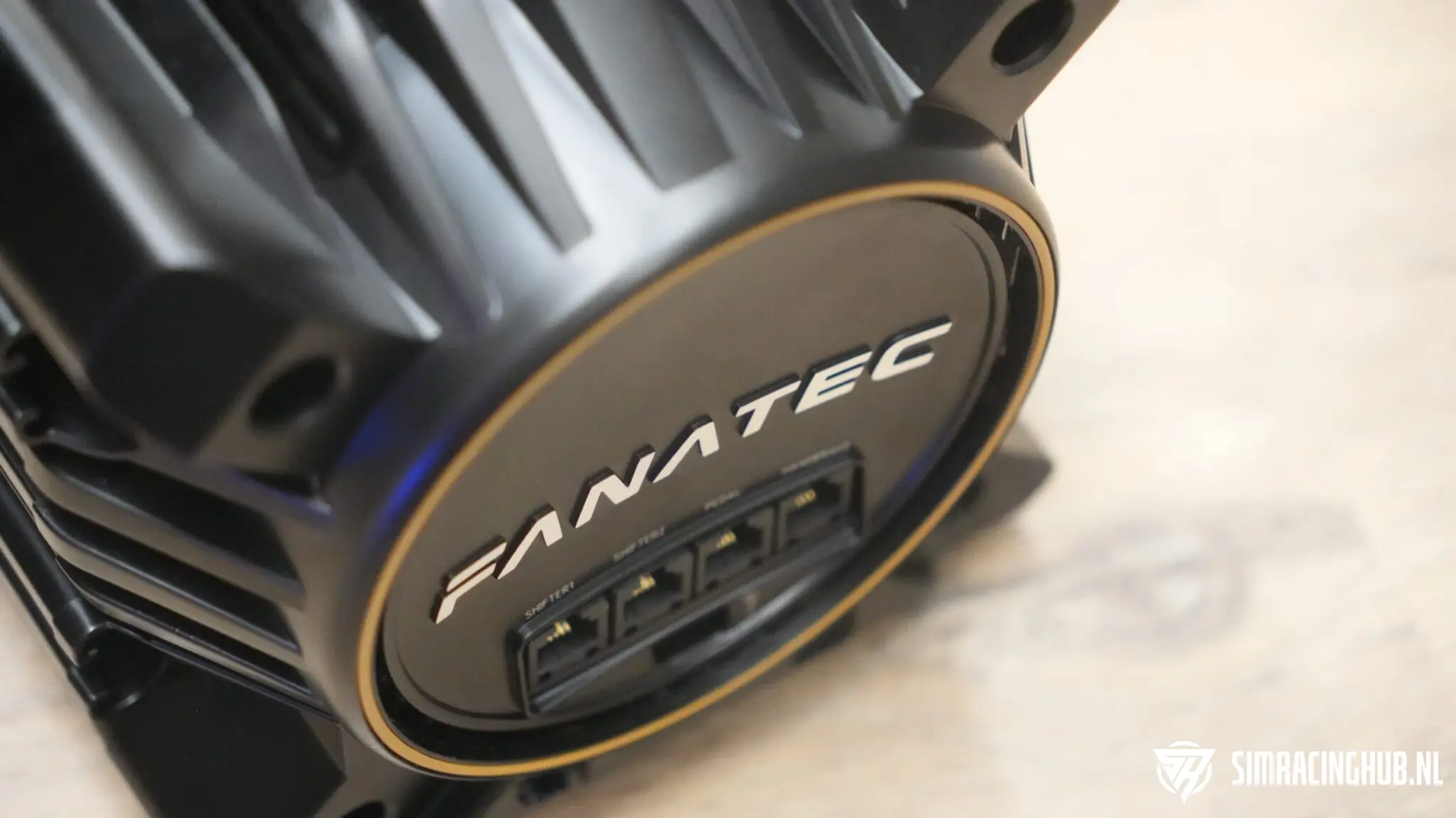
- Ports: Power, USB-C, Shifter 1, Shifter 2 (Sequential), Pedals, Handbrake, CAN
- Included: 10 cm shaft extension + T-nuts and montage tools
- Weight: Fanatec does not officially publish this
- Technology FullForce and FluxBarrier
Installation and montage
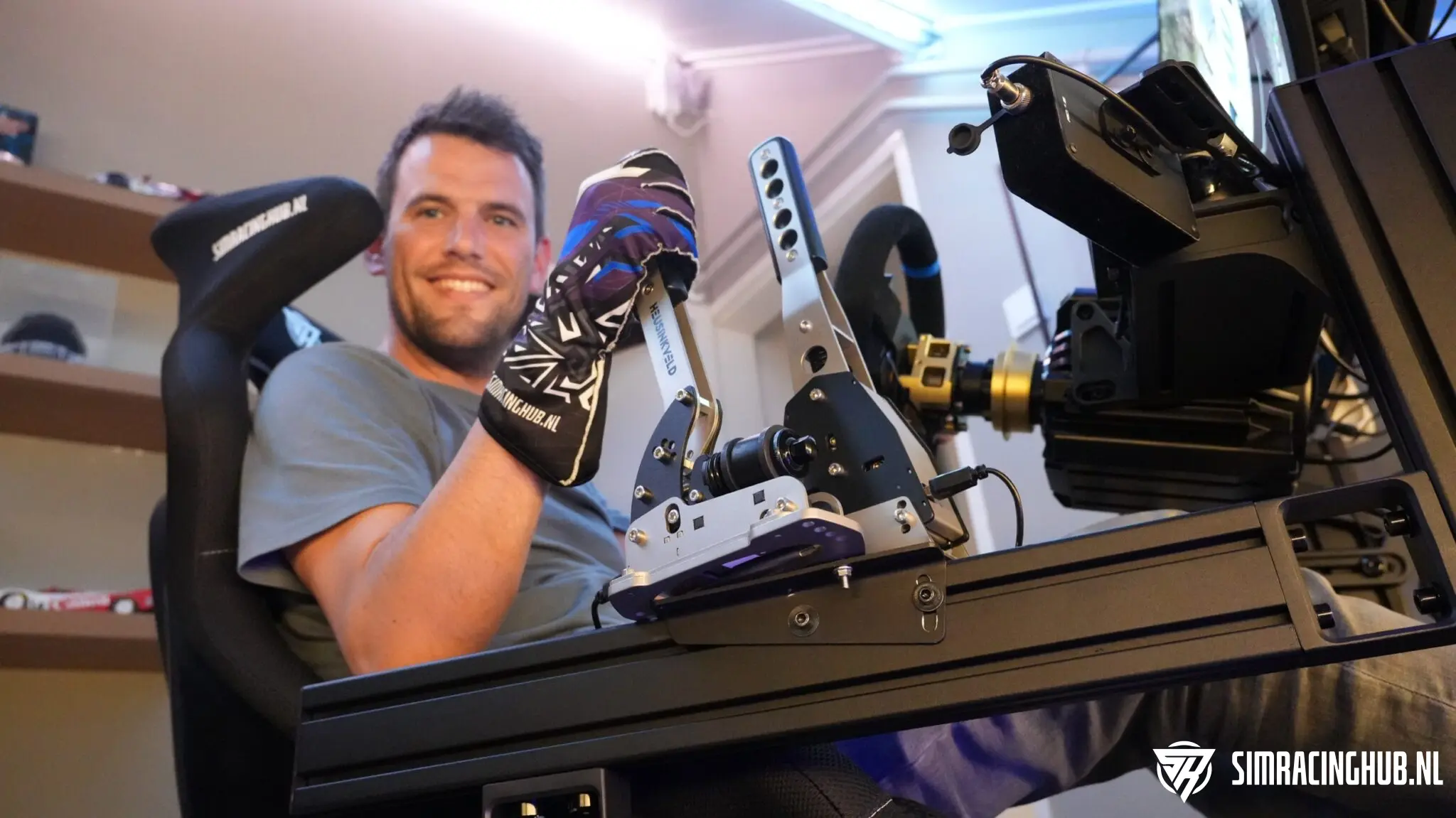
The installation itself was surprisingly straightforward. I mounted the Podium DD onto my Sim-Lab P1X Ultimate using the Sim-Lab side-mount. The base uses a rail-mount system with T-nuts, allowing for both side-mount and bottom-mount. This sounds like a practical detail, but with a wheelbase of this size, positioning is everything. I removed my Simucube 2 Sport and had the Podium DD in place faster than expected. On the P1X Ultimate, it felt rock-solid straight away. No flex, movement, or doubt. That's crucial, because with a 25 Nm base, you don't want your rig dictating what you feel.
You slide, drive, notice that your wrist position isn't quite right, and slide again. A cockpit is never finished in one go. Especially with an MSI 49” OLED ultrawide, a few centimetres make a difference to your sightline, dashboard position, and FOV. The included 10cm shaft extension is therefore not a gadget, but a useful addition. You can place the base further back and still keep the steering wheel at a natural distance.
Price of the Fanatec Podium DD
The Fanatec Podium DD is priced at €1,099.95 in the European Fanatec store. That’s a lot of money for a wheelbase. This isn’t a purchase you make on a whim. This is the moment when you need to ask yourself whether you really want to move into the top tier and, above all, whether spending more on your setup actually makes a difference.
In this price range, you automatically look at Simagic, MOZA, Asetek, VRS, and Simucube. That's part and parcel of it. What makes the Podium DD strong is that it doesn't just want to win on power. It feels mature in how it delivers feedback: calm as a foundation, detail without nervousness, and an ecosystem that works seamlessly in daily use.
There is a steep learning curve with this price. A 25 Nm base demands a rig that remains silent and stiff. If you have flex in your cockpit, you lose detail and end up compensating: torque down, filters up, and ultimately you're only using a fraction of what you're paying for.
On top of that comes the ecosystem layer. If you’re already using Fanatec with handlebars, hubs and QR2, this step feels logical and efficient. If you’re just getting started, you need to do the maths properly: wheelbase, handlebars, hubs, QR2, mounts and everything else involved. In that case, the Podium DD isn’t necessarily too expensive, but you need to weigh up the total cost against the total value it offers.


Unique features of the Fanatec Podium DD Wheelbase
When it comes to high-end wheelbases, it’s often about big words. Torque, headroom, fidelity, response, smoothness, or thermal stability. All interesting, but you don’t really think about them while driving. You mainly feel whether a base feels right. Whether it stays calm. Whether it provides enough detail without becoming overwhelming, and how smooth and strong the force feedback is. And whether, after a few sessions, you’re still fiddling with settings, or simply driving.
This last point happened quite quickly with the Podium DD. The base doesn't feel like it's constantly trying to show how strong it is. Instead, it feels like it has a lot of headroom. And that's precisely where this wheelbase becomes interesting for me.
25 Nm: particularly interesting because you don't use it fully
25 Nm sounds impressive. And to be honest, it is. But I haven’t driven this base at 100%, and I don’t think most sim racers will either. In my setup, around 70% was more than enough. Not because the base becomes undriveable otherwise, but because at a certain point you go beyond what’s realistic and practical.
So for me, the added value isn't in maximum torque, but in margin. The Podium DD feels relaxed. It doesn't have to work hard to transmit heavy kerbs, quick corrections, or long, high-load steering corners. This keeps the signal calmer. You're less likely to feel the base clipping or the feedback being cut off.
I noticed this particularly in moments when the car just went over the limit. With oversteer, heavy compressions or quick counter-steer moments, the base remained clear. Not aggressive, not panicked, but controlled. That gives confidence.
The central area feels clean and quiet
What happens around the centre of the steering wheel is more important to me than pure strength. That's where you make constant small adjustments. You feel if the front has grip, if you're turning in too much, and if the car still wants to turn. With the Podium DD, that area feels good. Calm, but not dead. Clean, but not flat. The steering wheel provides information without being overbearing.
I could clearly feel when the front end started to load and when I was turning the wheel too sharply. Particularly during rapid steering movements and during intense rally manoeuvres, I noticed that the Podium DD actually remained stable. With the rally wheel and the Podium Rally Button Module, the base actually remained stable during larger steering movements and quick corrections. And that’s the crux of it for me: I don’t want a steering wheel that constantly reminds me just how powerful it is. I want a base that remains responsive when the car starts to move. That’s where the Podium DD inspires confidence.
QR2 is mainly less hassle
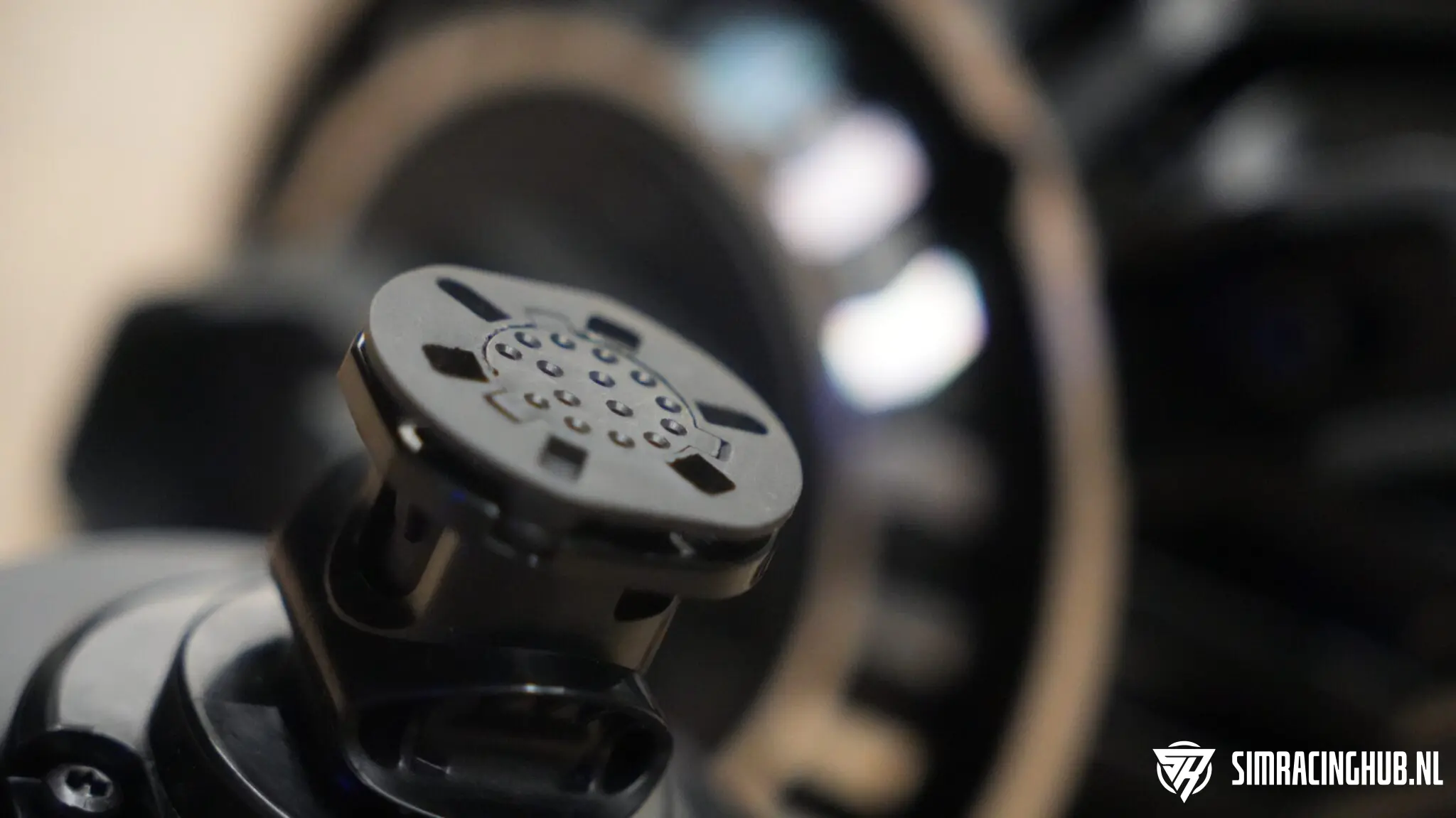
QR2 may not be the most exciting feature to write about, but in day-to-day use it’s one of the most welcome improvements. Especially since Fanatec hasn’t always been particularly strong in this area in the past. With QR1, it sometimes felt as though it didn’t quite live up to the ambitions of a direct-drive ecosystem. With QR2, I have that feeling much less.
The connection feels tight. Gear changes are quick. And importantly: you don't have to work with loose cables, connectors or half-baked solutions. With the Podium Rally Button Module, GT3 The Wheel Rim and ClubSport Hub V2 just felt pleasant and reliable. That might sound minor, but if you regularly switch between GT and rally, it does make a difference. You think less about your hardware and get into the sim faster.
The shaft extension is handy, but not a must-have for me
The supplied 10 cm shaft extension is slim. In many setups, it can really help to place the wheelbase further back without your steering wheel ending up too far away. This can be particularly useful for your sightline, FOV, and dashboard position in ultrawide or triple monitor setups.
In my own setup, I didn’t end up using it. Still, I fully understand why Fanatec includes it. Not every cockpit has the same monitor position, and with a base of this size, a few centimetres can make a big difference. So for me, this isn’t a particularly exciting feature, but it is a practical addition. It’s exactly the sort of part you might not need, but which you’re glad to have if your setup requires it. A smart addition, then!
FullForce: Nice as an extra layer, but not the reason to buy it
FullForce is Fanatec’s additional layer on top of traditional force feedback. It doesn’t add extra raw power, but rather finer vibration cues such as road texture, engine vibration, kerbs, ABS effects and other subtle signals that you would normally feel less clearly through the steering wheel. In theory, this fits in well with what Fanatec is trying to achieve with the Podium DD: not just delivering more force, but conveying more information.
I'm still remaining level-headed about this. FullForce lives or dies by game support, and more specifically, how well it's implemented per sim. Fortunately, an increasing number of sim games support this functionality natively, but that doesn't automatically mean it feels equally valuable everywhere. If FullForce is implemented subtly and logically, it can enrich the experience. You'll feel more texture, more life, and sometimes just that extra bit of information from the car or the surface. But extra vibrations without clear meaning remain just extra vibrations. That won't automatically make you faster.
“FullForce is interesting, but not yet a reason to buy this wheelbase. It's an extra at the moment, but not the foundation. It definitely has potential, but I don't think it's coming through sufficiently right now.”
– Wilco Verhaegh
For me, FullForce is therefore mainly a nice bonus. You certainly notice a positive difference when it works well, but it’s not the reason why I’d buy the Podium DD. At its best, it adds extra texture and immersion. In less successful implementations, it mainly feels like vibration. The Podium DD’s core performance must therefore be strong enough without FullForce, and it is. Power delivery, clarity, detail, QR2, montage and everyday usability are more important to me. FullForce is a bonus. Not the foundation.
Compatibility and third-party steering wheels
The Podium DD works on PC with Fanatec steering wheels and hubs. On Xbox, it works if you use an Xbox-licensed Fanatec steering wheel. PlayStation is not supported, and this cannot be resolved through a software update. I think that’s a missed opportunity, especially since the ClubSport DD+ does support it.
At the same time, something important has changed. With the introduction of the new Fanatec Hub, third-party steering wheels are now compatible with this wheelbase. That’s a relief. For years, Fanatec has been a relatively closed ecosystem. Sometimes that’s nice, because everything works well together, but it can also be frustrating. For me, that was once one of the reasons I started looking at other wheelbases.
“Fanatec has finally found a solution to a restriction that they themselves had maintained for years. They could have done this sooner, but it’s good that they’ve taken this step now.”
The new Fanatec Wheel Hub takes the edge off the old Fanatec issue. You still benefit from QR2, the integration and ease of use, but you’re less likely to run into problems if you want to use a specific steering wheel that isn’t part of the Fanatec range.
Design and finish
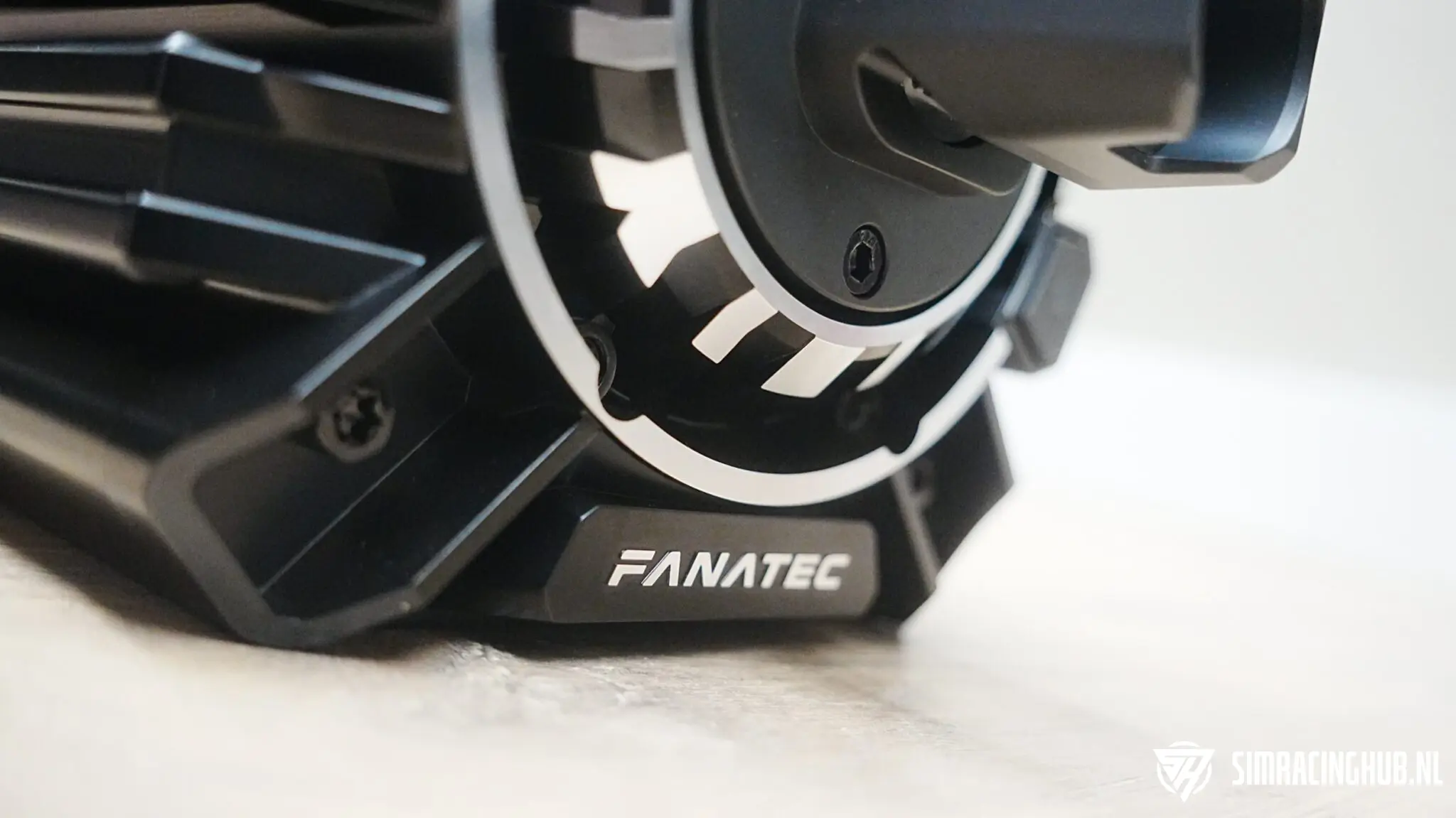
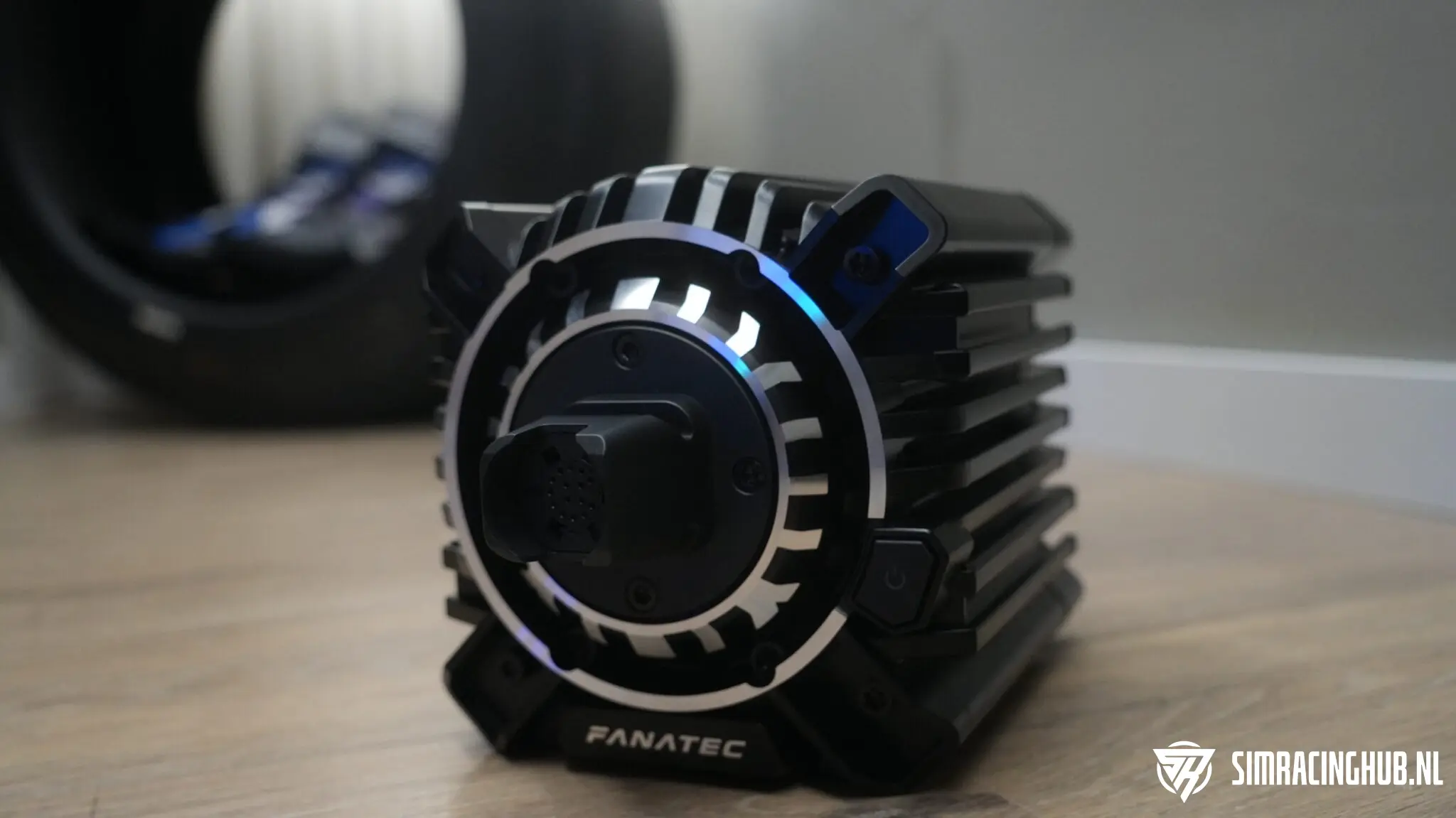
The design of the Fanatec Podium DD is very similar to that of the ClubSport DD and ClubSport DD+. At first glance, it almost looks as though it’s part of the same family, and that’s not necessarily a bad thing. In fact, I still think this is one of the more attractive wheelbases currently available. The shape is sleek, the cooling fins give it a serious technical look and the finish immediately looks premium. Place it on a table or on a neat rig and you can see straight away that this is no entry-level product.
Still, it feels a bit off. With a Podium model, I expect it to stand out more. Fanatec has clearly put a lot of effort into the interior of this wheelbase, but on the outside it feels as though the ClubSport DD design has largely been carried over. That design works, mind you. The proportions are good, the shape is recognisable, and the whole thing really feels like Fanatec. But if this is your new flagship, I’d like it to feel a bit more distinctly like a flagship.
Better materials, subtle differences
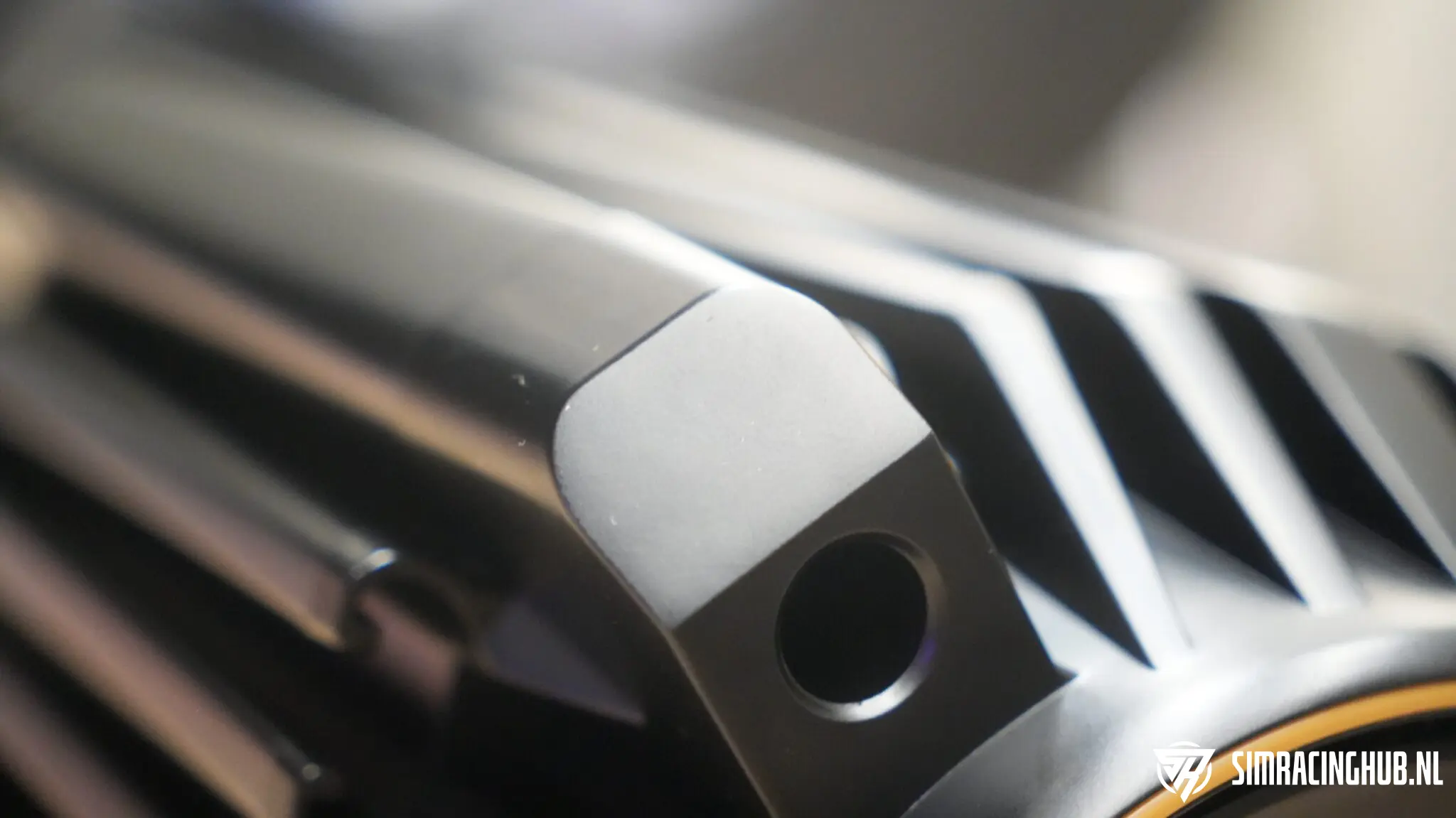
There are indeed differences. The front and back of the casing are now finished in aluminium, whereas the ClubSport DD series uses more plastic. The bare metal finish around the steering shaft and the 3D logo on the front also give the Podium DD a bit more maturity. They aren't huge visual leaps, but you can see and feel that the finish is a level higher.
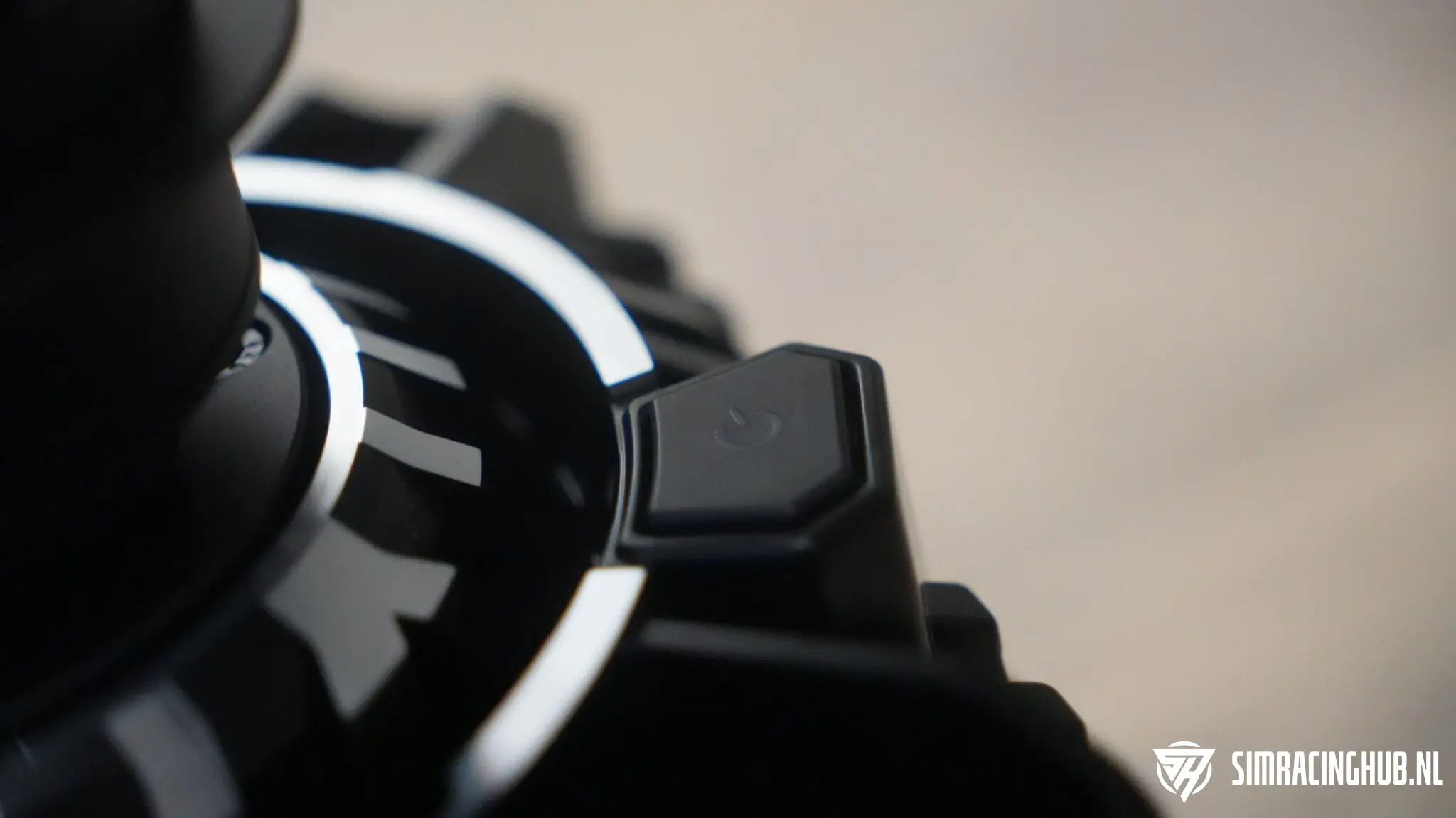
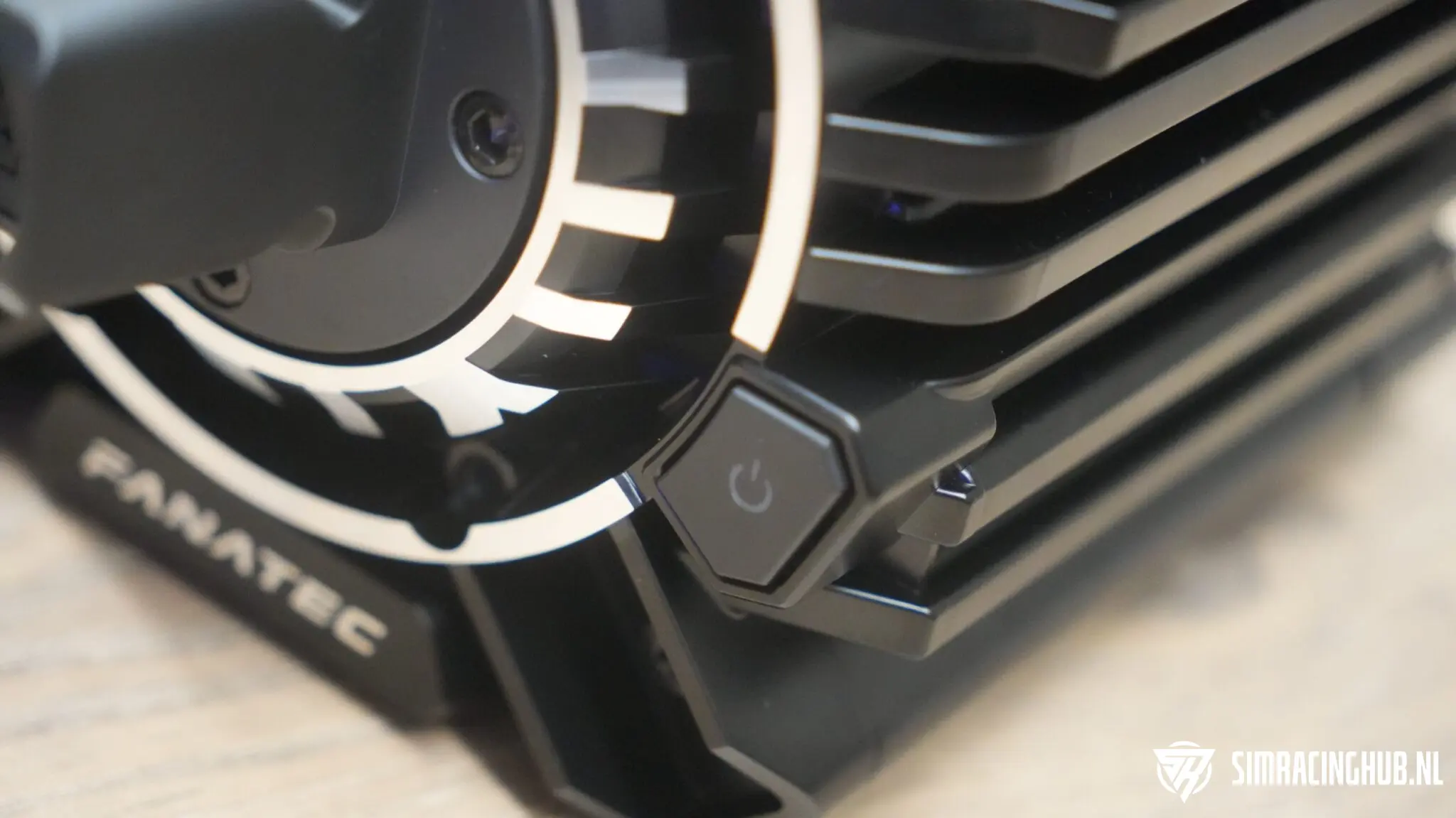
At the same time, there are details that are less convincing. For example, the on/off button still feels a bit cheap compared to the rest of the wheelbase. That's not a disaster and it doesn't change the driving experience, but with a wheelbase in this segment, such things are noticed more quickly. Precisely because the rest feels so solid and premium, you expect the small contact points to reach that level as well.
The design attracts attention
For a beginner or semi-experienced sim racer, the Podium DD is likely exactly the kind of hardware that immediately grabs your attention. Invite your friends or family over to show off your setup, and this is the sort of component that eyes will automatically be drawn to. It has something imposing about it. It really stands out. A bit like that one popular friend at a birthday party who effortlessly draws all the conversation towards them. Is that bad? No, absolutely not. For many people, that's precisely part of the allure of high-end sim racing hardware.
“The Podium DD is one of the nicest wheelbases around at the moment, but also one that likes to show itself off.”
In my own setup, it's a bit more nuanced. I'm increasingly building my triple monitor setup as a complete, realistic sim racing environment. In that case, I primarily want the hardware to blend into the overall picture. The cockpit should feel like one system, not a collection of individual products all demanding attention. And that's precisely where, in my opinion, the Podium DD just misses the mark slightly.
Personally, I find it a bit too obtrusive. Not ugly or disruptive in a general sense, but distinctly ‘visible’. In my test setup, that's not a problem, but in my triple monitor setup, I find I'd prefer a wheelbase that is visually a bit more discreet. A Simucube 2 does that better. It feels more neutral, functional, and less like a consumer product that wants to be seen. That fits better with a cockpit where realism and calm are more important than show.
My opinion of the design
That makes the design of the Podium DD difficult to assess. Objectively speaking, it’s a superb wheelbase. The finish is better than on the ClubSport DD series, the aluminium parts are a step up, and the whole thing feels sturdy and premium. But subjectively speaking, I would have liked to see Fanatec either distance itself further from the ClubSport line, or opt for a slightly more neutral and professional design. As it stands, it sits somewhere in between: attractive, recognisable and solid, but for my taste just a touch too prominent in a realistic high-end cockpit.
Software: Fanatec App
Fanatec hasn’t always had the best reputation when it comes to software. Drivers, firmware, standalone tools, settings, profiles: in the past, things sometimes felt less polished than the hardware ecosystem promised. With the Podium DD, the picture is more positive. The new Fanatec app brings driver management, firmware updates and tuning settings more closely together, making the experience much clearer.
In practice, that's more important than many sim racers will admit. A wheelbase can be technically brilliant, but if you first have to spend three evenings comparing settings before it feels right, you lose the fun. With the Podium DD, the basics feel pretty good quite quickly. Especially in iRacing, Assetto Corsa Competizione, Le Mans Ultimate and Automobilista 2, you can achieve a usable setup relatively quickly. Of course, you can then fine-tune. And you should do that. But you don't start from scratch. It Calibrating the Podium DD in Automobilista 2 required some patience and wasn't always easy.

That’s an advantage over some high-end alternatives, where the power is immense, but the responsibility for filtering, damping, slew rate, reconstruction filters and profile management falls more heavily on the user. Fanatec makes the experience less intimidating. That’s not the same as being less professional. Above all, it means the base feels more accessible to people who want high-end hardware but don’t want to spend half their evening fiddling with settings.
What I particularly like is that Fanatec strikes a balance between accessibility and control. You can drive fast using a basic profile, but you can also fine-tune it further if you feel like it. To me, that’s the right approach. Sim racing hardware should be customisable, but it shouldn’t require endless tweaking before you can actually enjoy driving.
My personal experience: where the Podium DD has to prove itself
With a wheelbase like the Fanatec Podium DD, it all ultimately comes down to one question: how does it drive? It’s not about the torque figures on the product page, nor how impressive the chassis looks, nor even how much technology Fanatec has packed into it. As soon as you drive out of the pit lane, it becomes simpler: do you trust what you feel?
That's where the most tension was for me. Not because I doubted the power. At 25 Nm, you simply expect a base to be able to pull hard. My question was mainly whether the Podium DD feels clean and smooth enough. Whether it brings calm. Whether it doesn't crush small signals under a layer of impressive force. Because that's the difference between a wheelbase that impresses and a wheelbase that helps you drive.
“If you’re already deeply immersed in the Fanatec ecosystem and have been waiting for a true successor to the DD1 or DD2, then this is probably the base you’ve been waiting for.”
After the first few sessions, it soon became clear that the Podium DD falls mainly into the second category. The power is there, more than enough in fact, but the real quality lies in the headroom that power creates. And to be honest; 25 Nm sounds interesting. But you’d never set this to 100%. I ‘curb’ it to around 70%, which is more than enough.
Different Sims, same character
I tested the Podium DD in iRacing, RaceRoom, Assetto Corsa EVO & Rally, Automobilista 2 and Le Mans Ultimate. These are titles where you quickly get a feel for whether a wheelbase is merely powerful, or whether it also provides useful feedback. In that respect, the Podium DD isn’t the rawest or most analytical wheelbase I’ve used. A Simucube can feel slightly more open and sharper in the finest details. But the Fanatec communicates in a mature and reliable way. Automobilista 2 and Le Mans Ultimate confirmed that impression. The fundamentals remain recognisable: plenty of power in reserve, a clean mid-range and a smooth way of conveying information. That makes it easy to get on with. You still need to fine-tune the settings, but it doesn’t feel like a base that needs to be completely reinvented for every sim.
Widely deployable
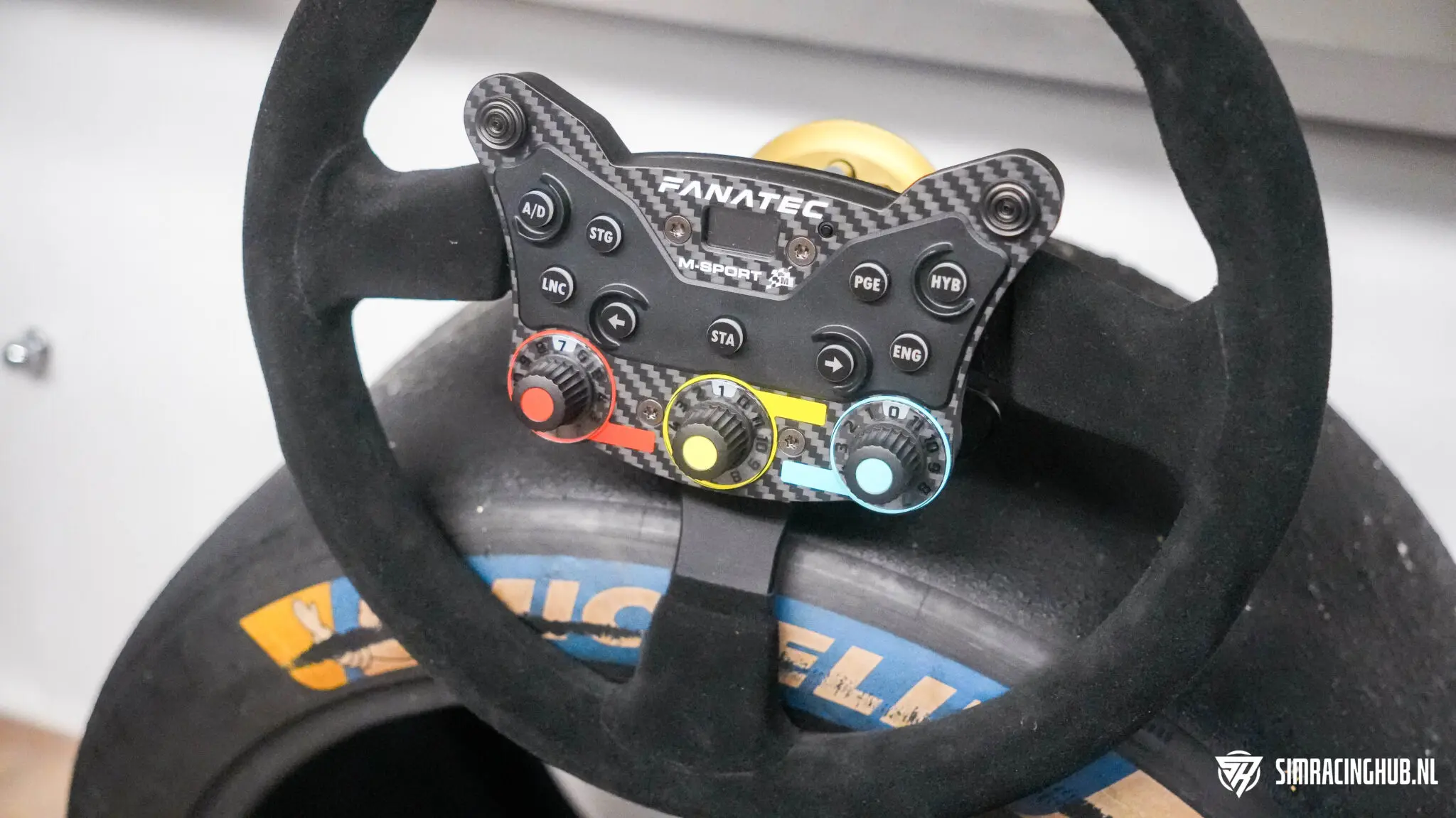
The steering wheels I used showed well how versatile the Podium DD is. With the Fanatec ClubSport Wheel Rim GT3 The base felt precise and controlled in GT cars, especially around the mid-corner and when building steering load. That's the area where you feel if the front tyres are working, if you're just over-steering, and if the car still wants to turn.
With the rally steering wheel and the Podium Rally Button Module I saw another side of the wheelbase. Larger steering angles, quicker inputs and more corrections demand speed without instability. The Podium DD remained calm here too. Not slow or deadened by filters, but controlled, smooth and balanced. This says more than one perfect hot lap. The wheelbase remained consistent in character across different disciplines and never felt like it needed constant taming. I am very satisfied and positively surprised by this.
The pitfall with this wheelbase is talking too much about 25 Nm. Of course, that's impressive, but most sim racers don't drive at 25 Nm constantly. Neither do I. Many drivers are somewhere between 8 and 15 Nm, depending on the sim, car, wheel diameter, and personal preference. Therefore, the honest question is: aren't you just buying too much wheelbase with the Podium DD? Perhaps. Especially if you never go above 10 Nm and primarily race casually or semi-seriously. In that case, a ClubSport DD, ClubSport DD+, Simagic Alpha, Asetek Forte, or MOZA R16/R21 would probably be more logical.
“Headroom isn't bought to steer harder, but rather to ride more calmly without losing detail.”
But that's only half the story. A powerful amp running well below its limit often feels smoother and more consistent than a weaker amp that has to work harder. So you're not just buying maximum power, you're buying headroom. You notice the headroom during peaks, quick steering adjustments, heavy kerbs, compressions and long stints. Not because you're constantly using 25 Nm, but because you never feel like the base is hitting its ceiling.
At first, you’re still consciously testing its power. You drive over kerbs, provoke oversteer, brake just a little too late and push it to the limit. But after a while, that fades away. Then the wheelbase ceases to be a subject in its own right, but becomes a conduit. You feel the car, not the hardware. And that is perhaps the greatest compliment I can pay this wheelbase: the Fanatec Podium DD wheelbase feels powerful, yet smooth and balanced.
The Podium DD isn't special because it can pull hard. More high-end bases can do that. It's strong because it combines power with quietness. The base feels mature, controlled, and reliable. Not the most raw or analytical wheelbase I've ever used, but a wheelbase that quickly became logical and familiar in my setup.
So for me, the value isn't in 25 Nm as a number, but in the confidence that margin provides once you really start pushing the car. If you're looking for maximum openness and extreme analytical sharpness, then Simucube remains a serious benchmark. If you're looking for a powerful, quiet, and well-integrated wheelbase within an ecosystem that causes less hassle on a daily basis, then the Podium DD makes a strong case for itself.
Who is the Podium DD logical for?
The Fanatec Podium DD is particularly well-suited to PC sim racers with a rigid rig, multiple steering wheels and a desire to experience high-end driving within the Fanatec ecosystem. If you already own Fanatec hardware, this base feels like an efficient upgrade. You don’t need to rethink everything about your wheelbase.
For beginners, it's usually too much. Not because you can't drive with it, but because the ratio isn't right. If your rig still has flex, your pedals are limited, or you mainly ride casually, you'll get much more benefit from other upgrades. A ClubSport DD, ClubSport DD+, Simagic Alpha, MOZA R16/R21, or Asetek Forte might be much more logical.
Even if you're looking for maximum openness and absolute analytical sharpness, I would still consider Simucube and VRS. The Podium DD is powerful, but not the most neutral or most open base on the market. Its value lies in the combination of power, quietness, and ecosystem convenience. This is precisely what makes it attractive, but also what makes it more specific.
Advantages
- Strong, quiet force feedback
- Plenty of torque headroom
- Solid all-metal build quality
- QR2 works excellently
- Shaft extension included
- Simple software
Cons
- Little design distinction
- No PlayStation support
- FullForce support still limited
The Fanatec Podium DD is an impressive wheelbase, but it’s not without its caveats. I think it’s important to point that out. In this price range, you’re not just buying “a better wheelbase”. You’re buying a direction: an ecosystem, a certain type of steering feel, a level of power and a degree of ease of use. There are clear advantages to this, but also aspects you need to be honest about.
Conclusion: the Podium DD is convincingEnd
The Fanatec Podium DD marks a strong return by Fanatec to the high-end direct-drive segment. Not simply because it delivers 25 Nm, but because it convincingly combines power, smoothness and the convenience of a robust ecosystem. The wheelbase feels mature, controlled and reliable. QR2 works excellently, the montage is well thought out, the software is more accessible than before and the force feedback feels much better than just an impressive figure on paper.
This is without a doubt the best direct-drive wheelbase that Fanatec currently has to offer. And perhaps more importantly, it finally feels like a worthy successor to the DD1 and DD2. Not just a safe update, but a platform that puts Fanatec back in serious contention at the top end of the market.
However, this isn’t necessarily the right choice for everyone. The Podium DD requires a rigid cockpit, a serious setup and a conscious choice for Fanatec. Without that foundation, you’re likely to end up with more wheelbase than you need. Those seeking maximum openness or the most analytical force feedback should still look at alternatives such as Simucube, Asetek, VRS or Simagic. The Podium DD is strong, but not the only right choice in this segment.
For me, it was successful mainly because it became self-evident after a few sessions. Not spectacular for the sake of being spectacular, but calm, powerful, and reliable. With a high-end wheelbase, I don't want to be constantly fiddling with the hardware. I want to feel what the car is doing. The Podium DD succeeds convincingly in this.
And that is perhaps the biggest difference compared to Fanatec from a few years ago. At the time, I actually switched partly to a different ecosystem because Fanatec felt too closed off. Third-party steering wheels were too much of a faff, and at a certain point, as a sim racer, you just want freedom. With the new Fanatec Wheel Hub, that objection has largely disappeared. That suddenly makes the Podium DD much more appealing than previous Fanatec bases.
“The Podium DD isn’t perfect, but it certainly feels like a mature product. And that’s exactly what Fanatec needed. This is without a doubt the best direct-drive wheelbase that Fanatec currently has to offer.”
The sharpest anecdote? After a few weeks of testing, I realised I didn't immediately want to switch back to my Simucube 2 Sport. I hadn't expected that beforehand. Not because the Podium DD suddenly does everything better, but because it just felt right in my single monitor setup. In fact, I'm embracing the new Podium DD in my single monitor setup.
And that’s exactly where its strength lies. If you’re already deeply immersed in the Fanatec ecosystem, have a solid cockpit and have been waiting for a genuine high-end successor to the DD1 or DD2, then this is probably the wheelbase you’ve been waiting for. Not because you need 25 Nm, but because after a few sessions you’ll realise you don’t want to go back to anything that feels less smooth, less precise or less intuitive.
Fanatec Discount Code
Frequently Asked Questions about the Podium DD
Is the Fanatec Podium DD better than the ClubSport DD+?
The Podium DD is more powerful and has more headroom than the ClubSport DD+, but that doesn’t automatically mean it’s better for everyone. The ClubSport DD+ is cheaper, more compact and is PlayStation-compatible. For PC users who want maximum Fanatec performance, the Podium DD makes more sense. For console users or drivers who are happy with 15 Nm, the ClubSport DD+ is probably the wiser choice.
Is 25 Nm too much for sim racing?
For many sim racers, 25 Nm is indeed more than they use in practice. The added value lies primarily in headroom. You don't use the full force constantly, but the extra margin ensures the base clips less frequently and remains smoother during heavy peaks, quick corrections, and long stints.
Does the Fanatec Podium DD work on PlayStation?
No, the Fanatec Podium DD does not work on PlayStation. The base is designed for PC and works on Xbox when used with a compatible Xbox steering wheel. If you need PlayStation compatibility, you’re better off looking at the Fanatec ClubSport DD+.
Is the Podium DD suitable for beginners?
Technically, a beginner can drive with it, but logically, it usually doesn't make sense. The Podium DD is a high-end wheelbase for sim racers with a solid cockpit and a clear need for a lot of power, headroom, and ecosystem convenience. For beginners, cheaper direct drive bases are often a wiser choice.
Should I upgrade from a DD1 or DD2 to the new Podium DD?
Not necessarily. If you’re happy with your DD1 or DD2, especially when used with the QR2, upgrading isn’t essential. The new Podium DD feels more modern, cleaner and better integrated, but the upgrade is particularly worthwhile if your old base no longer matches the standard of your current rig or if you’re looking for a future-proof Fanatec base.

 Nederlands
  Deutsch
  English (UK)
  Français