
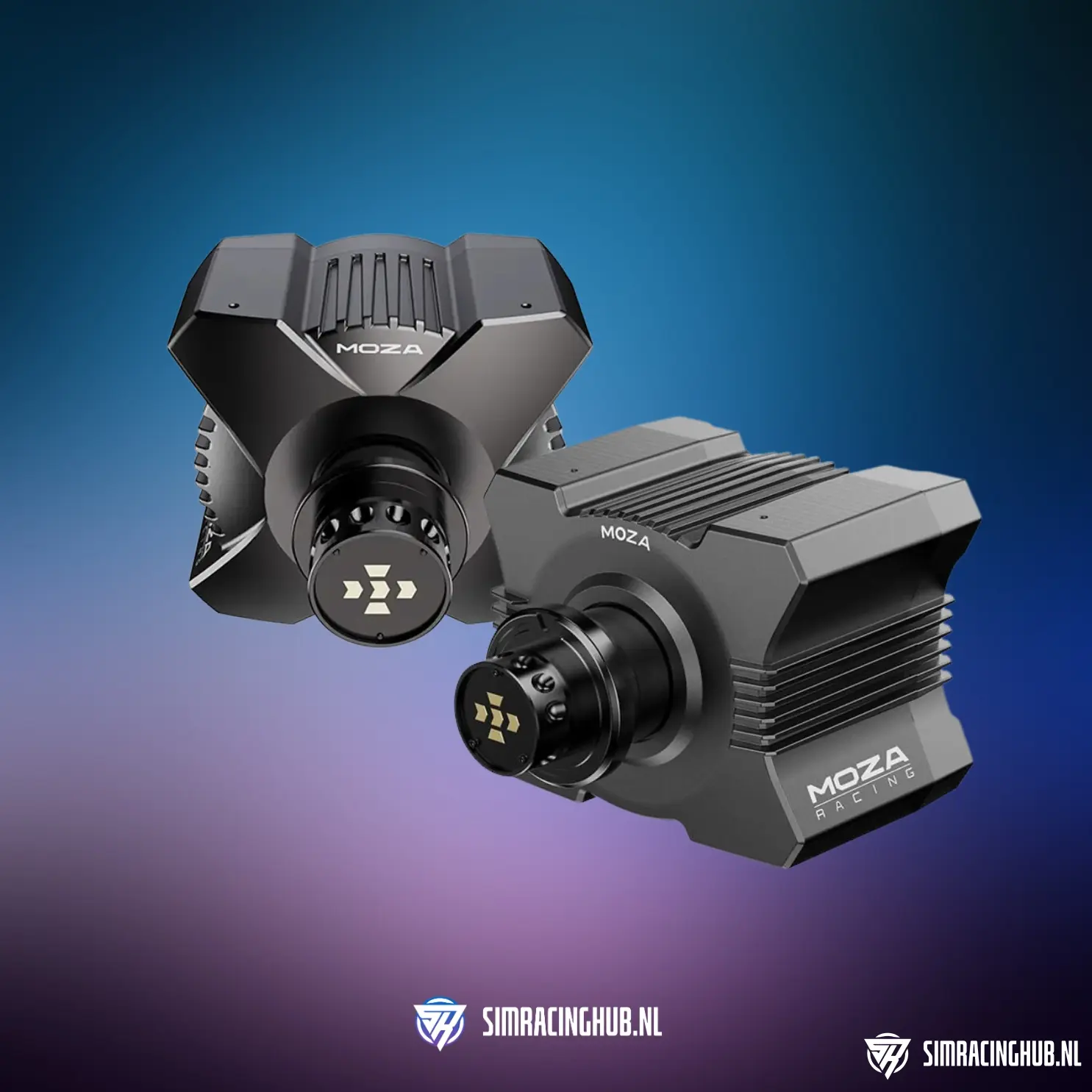
Some comparisons seem easy until you really think about it. The MOZA R3 and MOZA R5 are a good example of this. On paper, they are two compact direct drive bundles for sim racers looking to upgrade from a Logitech, Thrustmaster or other entry-level kit. Both affordable. Both modern. Both part of the same MOZA ecosystem.
Yet the real choice is not in the product sheet. That is in how you will drive, what platform you will drive on and how fast you expect your setup to grow. The latter is something many novice sim racers underestimate. You often buy a first direct drive bundle with the idea that you just want a better wheel than your current Logitech or Thrustmaster, but once you notice how much more direct and quiet a direct drive base feels, you automatically start looking more critically at brake feel, cockpit stiffness, steering diameter, quick releases and force feedback settings.
This is why I find the MOZA R3 vs R5 comparison more interesting than it seems at first glance. The R3 is not simply “the cheaper one”. And the R5 is not automatically “the better one” just because it has more torque. In fact, the R3 has one huge practical advantage: Xbox compatibility. The R5 has another advantage: it feels faster like a real sim racing base that will last you longer.
My short answer: if you ride on Xbox, then the MOZA R3 is the logical choice. If you drive on PC and the R5 fits within budget, then I would skip the R3 and go straight for the MOZA R5. Not because the R3 is bad, but because 3.9 Nm in 2026 is mostly a smart entry, while 5.5 Nm gives just enough extra margin to make you less likely to waver again.
“The R3 is the better console choice. The R5 is the better sim racing choice.”
That sounds short, but if you reduce the comparison to platform, growth space and force feedback headroom, this is exactly where my advice comes in. In this article, I explain both options so you can make an informed choice between the MOZA R3 vs R5.

Summary
Snel naar
The MOZA R3 is of particular interest to Xbox users and novice sim racers who want an affordable introduction to direct drive. The MOZA R5 is the better choice for PC users who want more force feedback, more margin and a setup that feels less likely to be intermediate. The difference between 3.9 Nm and 5.5 Nm seems small on paper, but in practice the R5 gives more peace of mind, more detail retention and more room to grow.
- The MOZA R3 delivers 3.9 Nm peak torque and is especially attractive due to Xbox compatibility.
- The MOZA R5 delivers 5.5 Nm peak torque and feels noticeably roomier, quieter and more informative.
- Both bundles use SR-P Lite pedals; they are fine to start with, but remain the weak link.
- For Xbox, the R3 makes sense; for PC, the R5 is usually the better investment.
- The real difference is not just in power, but in headroom: how much room the base has before force feedback closes in.
- Those planning to upgrade pedals, steering wheel or cockpit later have a more logical basis with the R5.
MOZA R3 vs R5 in brief: the choice without detours
Just putting the specifications side by side, this seems like a classic budget comparison: the R3 is cheaper and delivers 3.9 Nm, while the R5 is more expensive and delivers 5.5 Nm. Yet that only tells part of the story. You don't buy a wheelbase just for the maximum torque listed on the box, but mainly for how controllable it feels in a fast corner, how much detail stays upright over kerbs, how well you feel understeer coming on, and how quickly you notice the front of the car getting lighter. At those very moments, the difference between the R3 and R5 feels greater than the numbers on paper suggest.
| Section | MOZA R3 Bundle | MOZA R5 Bundle | What you get out of that in practice |
|---|---|---|---|
| Wheelbase type | Direct drive | Direct drive | Both feel cleaner and more direct than gear- or belt-driven entry wheels. |
| Peak torque | 3.9 Nm | 5.5 Nm | The R5 has more margin and is less likely to run into its limit. |
| Platform | PC or Xbox & PC, depending on version | PC | The R3 makes sense if Xbox is important. The R5 makes more sense for PC. |
| Steering wheel | ESX or ES Lite, depending on bundle/region | ES Wheel | Functional enough to boot, but no premium rim. |
| Pedals | SR-P Lite | SR-P Lite | The brake is serviceable, but limited once you want to ride more consistently. |
| Montage | Desk clamp + bottom mounting | Desk clamp + bottom mounting | Both fit well with desk, wheel stand or compact cockpit. |
| Ecosystem | MOZA | MOZA | Both can grow with other MOZA accessories. |
| Best choice for | Xbox, casual driving, compact setup | PC, more serious entry, grow longer | The R3 is more specific; the R5 is more broadly applicable. |
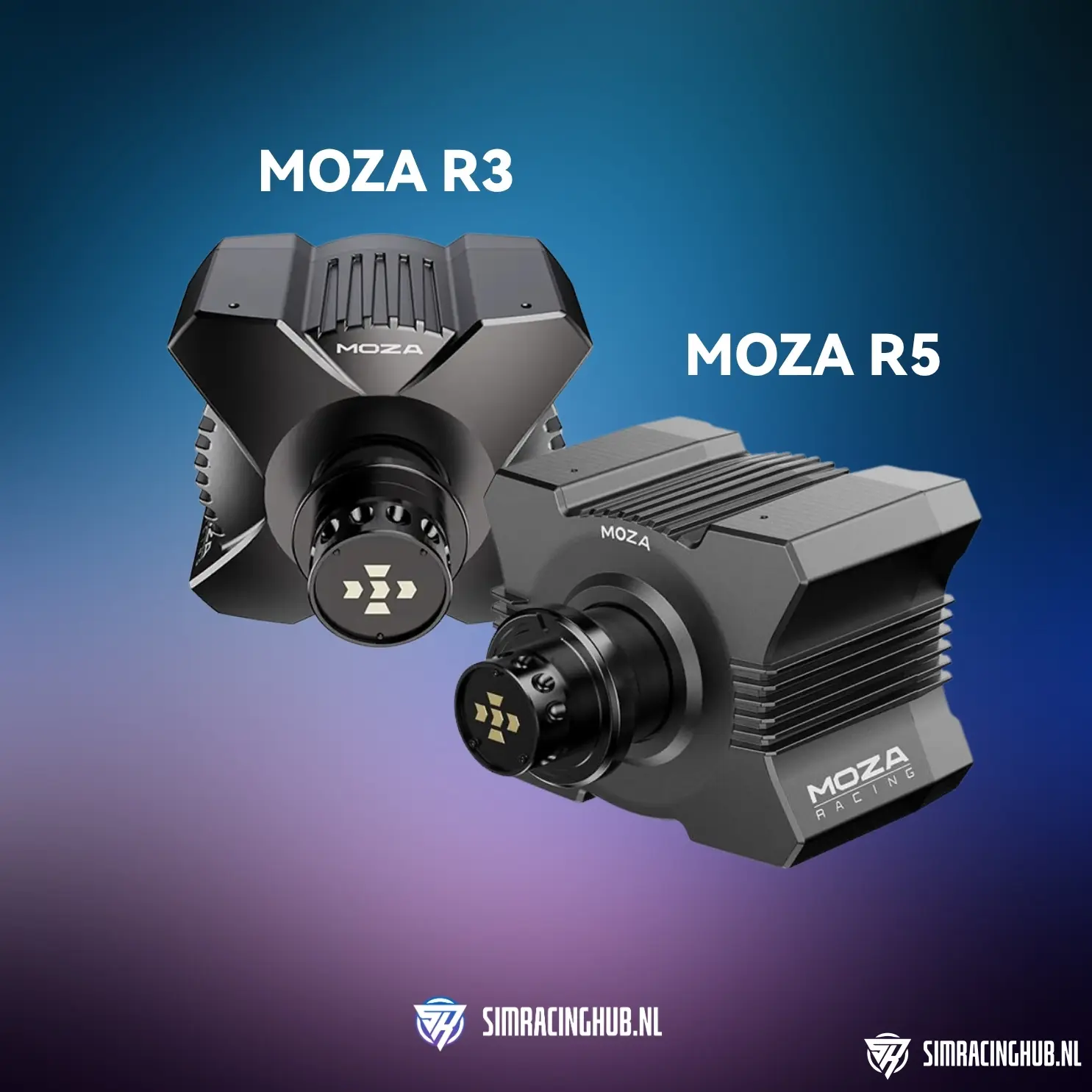
What always strikes me in this segment: manufacturers often sell entry-level bundles as complete solutions. They are, but only for a certain stage. The question is not whether you can drive it. Of course you can drive it. The question is how quickly you hit the limits once you start liking sim racing more than you had previously planned. And honestly: that often happens faster than people think.
What do the MOZA R3 and R5 cost?
The price makes this comparison much more interesting than just “the R3 is cheaper and the R5 is more expensive”. On the official US MOZA site, the R3 Racing Bundle for PC is around $279 USD, while the R3 Racing Bundle for Xbox & PC is around $339 USD. In Europe, those same R3 bundles on the official MOZA EU store are around €299 for the PC version and €359 for the Xbox & PC version. The MOZA R5 Racing Bundle is officially listed around $399 USD and €419 EUR.
| Bundle | Official USD price | Official EUR price | Practical interpretation |
| MOZA R3 Racing Bundle PC | $279 USD | €299 EUR | Cheapest entry, but without Xbox compatibility. |
| MOZA R3 Racing Bundle Xbox & PC | $339 USD | €359 EUR | More interesting if Xbox is important. |
| MOZA R5 Racing Bundle | $399 USD | €419 EUR | More expensive, but clearly stronger as a PC base. |
Please note that prices may vary due to promotions, VAT, shipping costs, import costs and local retailers. Therefore, with sim racing hardware, it is always smart to check current prices before you buy. Still, the price ratio does show something important. The R3 PC bundle is the cheapest route to direct drive, but the Xbox version is already getting closer to the R5. This makes the R5 on PC interesting faster, as you buy more force feedback margin for a relatively small extra cost.
For European buyers, I find particularly interesting the difference between €359 for the R3 Xbox & PC and €419 for the R5. If you drive on Xbox, then the R3 makes sense because the R5 doesn't fill that role. If you ride on PC, then €60 difference suddenly feels much less significant when you consider that you go from 3.9 Nm to 5.5 Nm. That's exactly the point where buying cheap is not automatically the smartest choice.
My practical price advice is therefore clear: choose the R3 not just because it is cheaper, but because Xbox compatibility or compact use is leading for you. Choose the R5 if you drive on PC and the price difference fits within budget, as you will not only buy more power, but more importantly more time before you want to upgrade again.

What is the MOZA R3?
The MOZA R3 is MOZA's most accessible direct drive bundle and especially interesting because of its Xbox version. The base delivers 3.9 Nm peak torque and comes as a compact set with steering wheel, pedals and desk clamp. This clearly targets sim racers who want to take a first step towards direct drive without immediately building a full cockpit or high-end setup.
That makes the R3 smarter than it looks on paper. Because 3.9 Nm does not sound impressive when you are used to discussions about 8, 12, 15 or even 25 Nm wheelbases. But for someone coming from a Logitech G923, Thrustmaster T248 or T300, the difference in drive is far more important than the bare torque figure. Above all, you feel that there is less mechanical interlayer between simulator and wheel. The feedback becomes more direct, quieter and less grainy.
Direct drive feels cleaner than a classic gear- or belt-driven entry wheel: less mechanical noise, less lag and less elasticity between what the simulator calculates and what your hands feel. This is the R3's strength, but at the same time its limit. The R3 lets you sample direct drive, only it doesn't give you a whole lot of room to go deeper afterwards. If you set the force feedback too hard, you'll hit the limit faster. If you start driving more seriously, you're more likely to crave more margin.
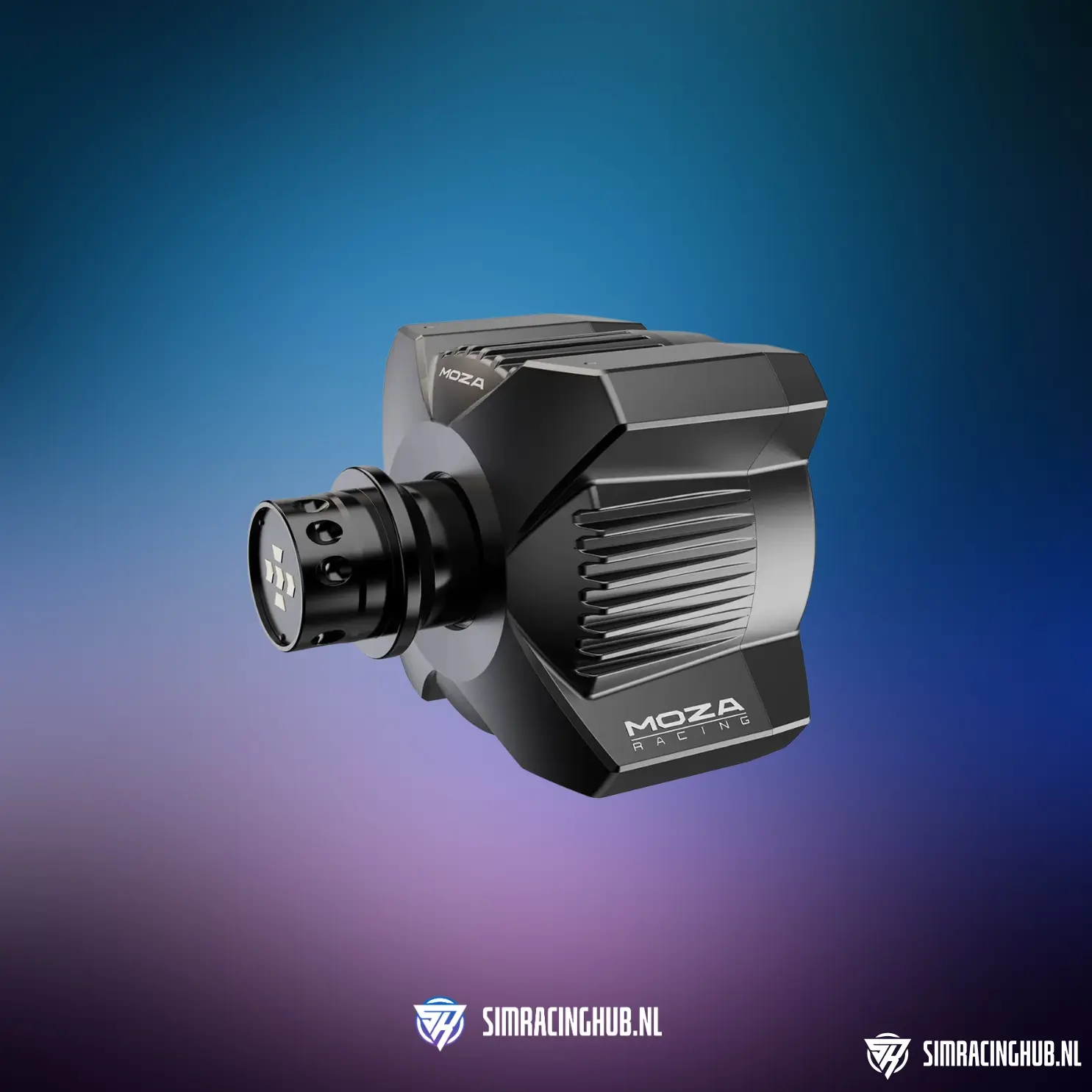
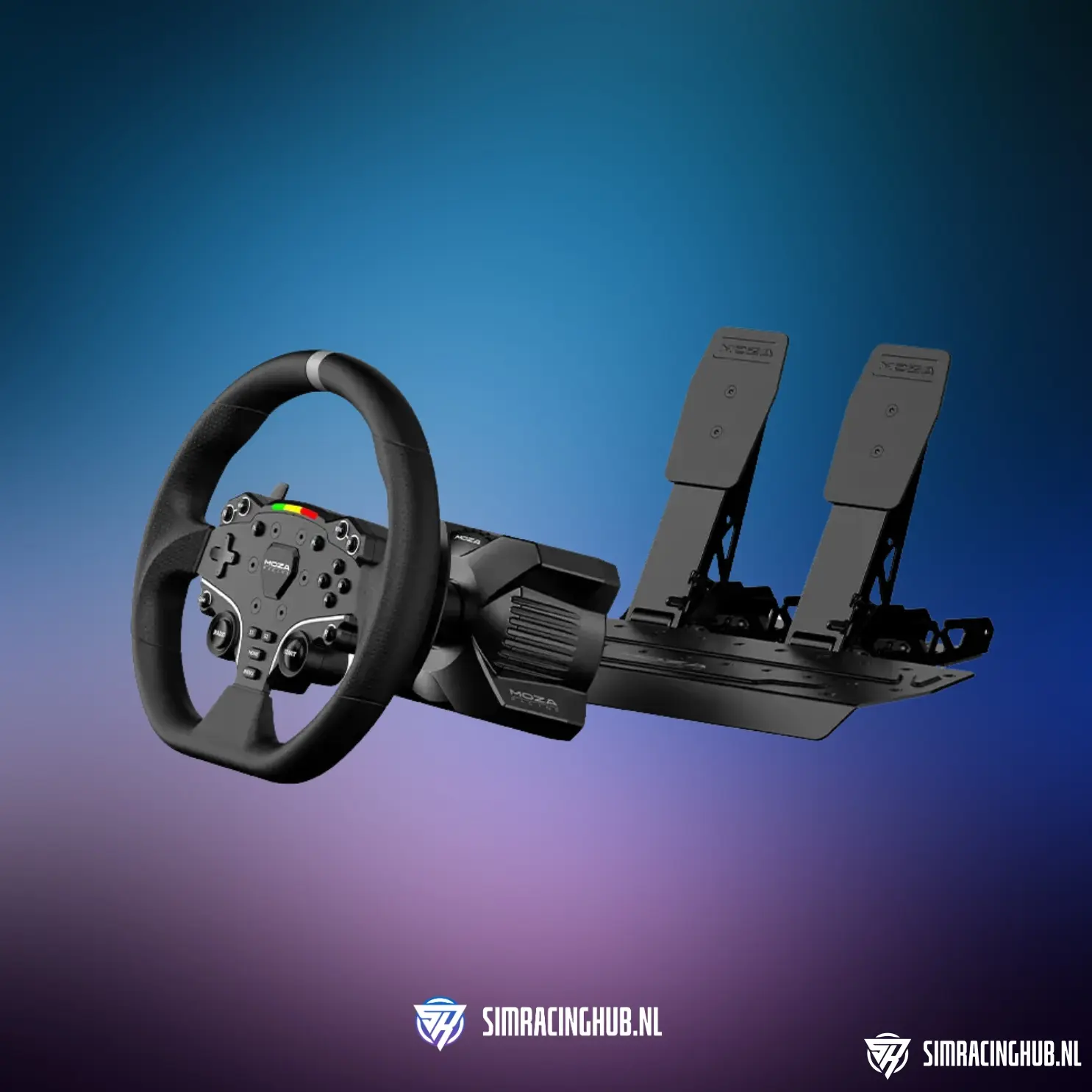
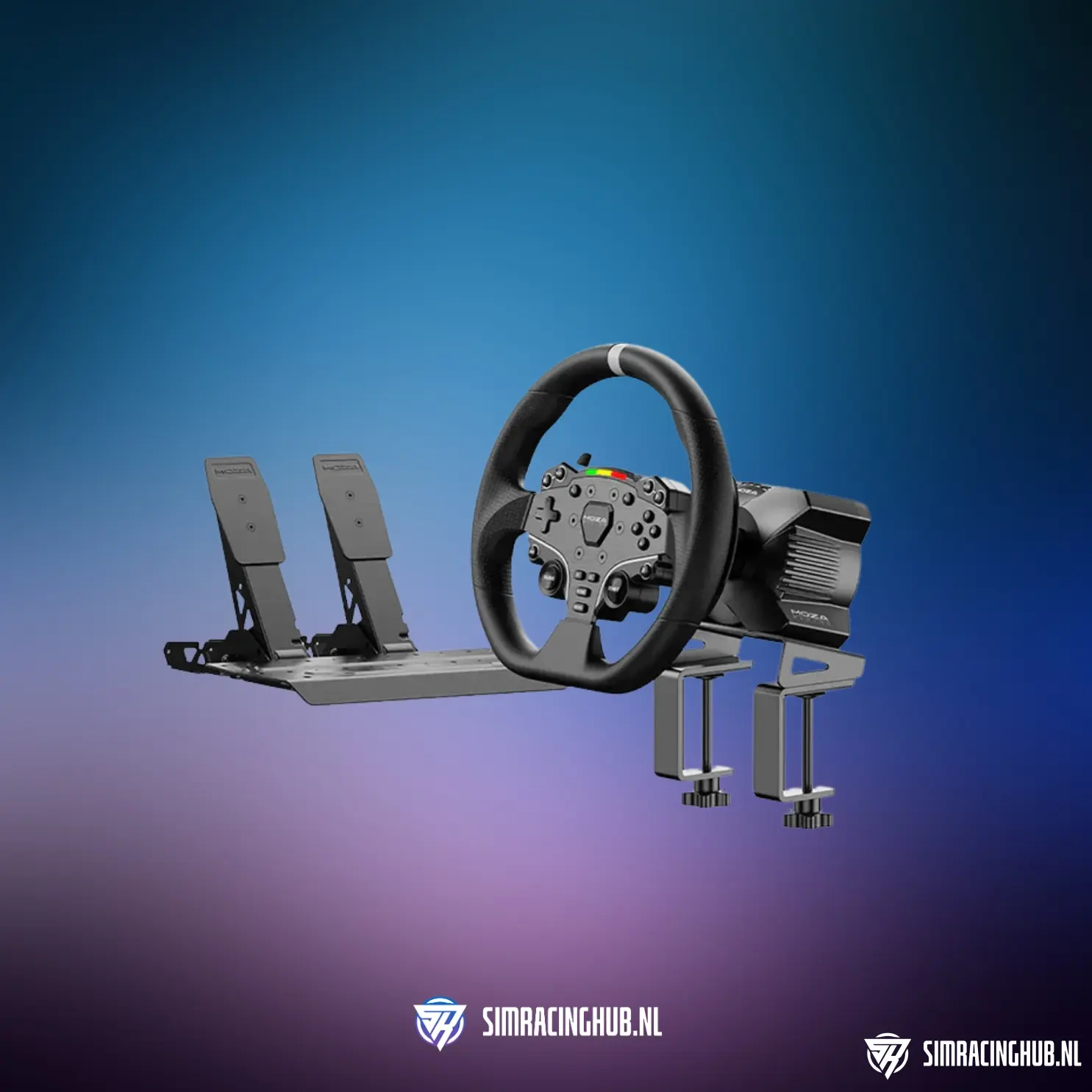
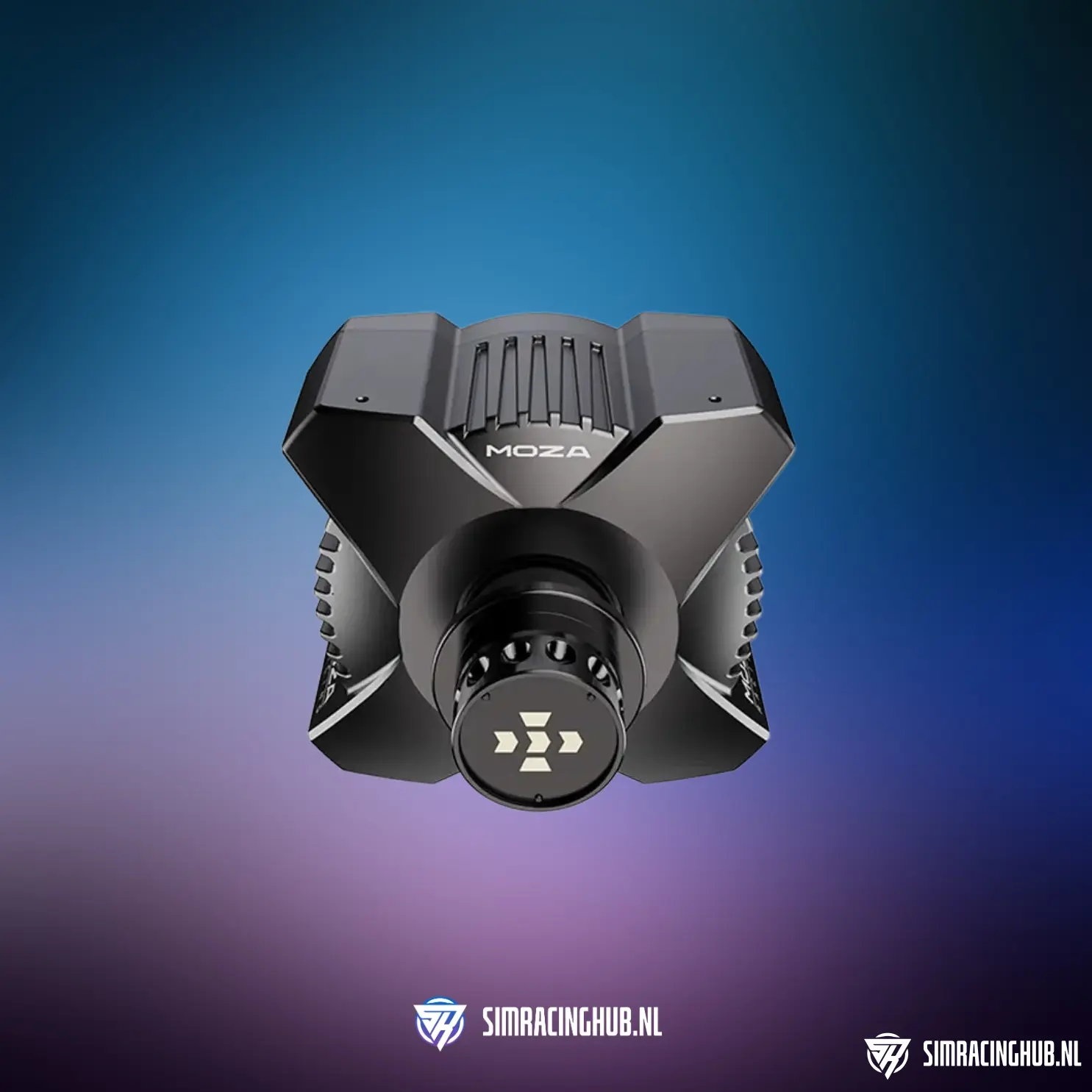
What I find strong about the R3 is that it has a very clear role. He is not trying to be a high-end base in mini format. He is a compact, relatively affordable direct drive entry for people who want to take a modern step forward more than anything else. That makes it credible, as long as you set the expectations right. Anyone expecting the R3 to offer the same quietness, power reserve and long-term value as a heavier base is looking at this product wrong.
“The R3 does not feel cheap because it is compact. It feels limited as soon as you ask it to do more than what it is designed to do.”
Exactly you have to be honest about that. The R3 is not a wrong purchase. It is just very clearly designed for a specific type of user: someone starting out compact, possibly riding Xbox and, above all, looking for a clear upgrade over classic entry-level wheels.
What is the MOZA R5?
The MOZA R5 is the more powerful direct drive entry-level bundle within this comparison. The base officially delivers 5.5 Nm peak torque and is mainly aimed at PC users looking for a complete, compact and relatively affordable direct drive setup.
Nor is the R5 a high-end base. If you are used to heavy bases with lots of holding torque and huge reserves, 5.5 Nm feels compact. But within the entry-level segment, the R5 is interesting precisely because it gives just enough extra room to feel more serious than a pure beginner's kit. It is closer to the point where a direct drive setup not only feels fun, but also gives useful information while driving.
That extra 1.6 Nm compared to the R3 sounds small. In use, it makes a difference. Not because your arms are suddenly pulled away from your torso, but because the base has more room to pass different signals side by side. Grip build-up, kerbs, steering load and light corrections stay better separated. This helps especially when you are not just riding for experience, but also for consistency.
That's more important than brute force. With the R5, the setup is less likely to feel like you're on the ceiling. Especially in iRacing, Le Mans Ultimate, Automobilista 2 and RaceRoom, it gives just a little more confidence: you feel a little earlier that the front end is starting to slide, a little more nuance in long corners and a little better when you drive over a kerb instead of clacking right over it. It's not a huge difference, but enough to influence your buying decision.
As a result, the R5 feels like the safer choice for someone building their first serious PC setup. It is still compact enough for a desk or wheel stand, but has more room to grow with you. Especially if you add better pedals or a sturdier cockpit later, the R5 will stay logical longer than the R3.


Is the difference between 3.9 Nm and 5.5 Nm really noticeable?
Yes, the difference between the MOZA R3 and R5 is noticeable. Not just because the R5 is more powerful, but mainly because it has more headroom. That means the wheelbase has more room to reproduce force feedback peaks without squashing details.
This is where many beginners look at torque wrongly. They think: more Nm means harder pulling. This is partly true, but it is not the whole story. A wheelbase with more margin doesn't always have to feel heavier. It can also feel calmer, cleaner and more informative precisely because it doesn't have to work as close to its maximum. A base that is constantly working against its limit can feel impressively heavy, yet provide less useful information.
With the R3, you have to adjust more deliberately. If you set the force feedback too aggressively, the base will clip faster. The simulator then demands more force than the base can deliver. The result: different forces become one big mass. You still feel resistance, but less nuance. This is especially unfortunate in situations where you need small signals, such as the start of understeer, slight oversteer corrections or the subtle difference between a kerb you can take and one that pulls the car out of balance.
With the R5, you have more leeway. This allows you to set the force feedback a bit fuller without immediately losing detail. Especially in GT cars, formula cars and longer corners with a lot of constant load, this feels more comfortable. You don't have to go overly low with your force feedback settings to maintain detail, and that makes the base more accessible in everyday use.
“The R5 doesn't just give you more power. Above all, it gives you more space before the feedback closes in.”
That's why I think the R5 for PC makes much more sense. The extra torque is not just a figure on the box, but a practical margin that prevents you from revisiting a more powerful base too soon.
Why headroom is more important than maximum power
Headroom may not be the sexiest word in a product comparison, but for sim racing hardware it is more important than many people think. Force feedback is not just about how hard a wheelbase can pull, but how much headroom it has left when multiple forces are requested simultaneously.
Say you are driving a fast GT car through a long right-hand bend, with constant load on the steering wheel, while going over a kerb on the inside and the front end starts to slide just a little. A weaker base has to reproduce all those signals within a smaller power margin. This allows details to flow together. You can feel that something is happening, but less exactly what is happening.

A base with more headroom does not have to be constantly on its toes. As a result, small signals hold up better. That doesn't mean you automatically get faster, but it does make it easier to read the car. Especially when you are trying to drive more consistently, this is valuable. You build confidence because you are more likely to recognise where the grip limit is.
In this comparison, that is exactly the R5's advantage. Not that it suddenly becomes a heavy, high-end wheelbase, but that it doesn't close up as quickly as the R3. For casual use, it matters less. For PC sim racing and longer sessions, it becomes more relevant.
The real question: are you playing on Xbox or PC?
The MOZA R3 vs R5 choice starts not with torque, but with platform. If you play on Xbox, then the R3 is the logical choice. If you play on PC, then my advice shifts almost immediately to the R5.
That may sound simple, but many comparisons complicate this unnecessarily. Xbox compatibility is no small detail. It determines whether the base fits logically into your setup at all. It made the R3 interesting precisely because, for a long time, Xbox users had fewer direct drive options than PC users.
So for Xbox, the R3 is not the “lesser R5”. It is the right tool for the right context. If you play Forza Motorsport, F1 or other console-centric racing games, the R3 gives you a compact and modern entry point without having to go straight to a much more expensive ecosystem. In that context, the lower torque rating is less of a problem because the overall use case is different: compact, accessible, often at a desk or wheel stand, and less focused on extensive hardware integration.
On PC, things are different. There, you have more choice, more simulators, more settings, more hardware integration and usually more chance that your setup will grow. Then you don't just want something that works today, but something that will still feel logical six months from now. You start playing with force feedback settings faster, you start comparing different cars and sims, and you notice more quickly when a base is low margin.
This is why I find the R5 on PC much easier to defend, especially when you see the bundle not just as an initial purchase, but as a foundation for years to come. And honestly? The Moza Racing R5 has positively surprised me in many ways! I had a great time having a nice casual racing with it.

MOZA R3 for Xbox: when is this the right choice?
The MOZA R3 is especially strong when Xbox compatibility is not a “nice touch” but a real necessity. In that case, you don't really need to make the equation more complicated than necessary. If you primarily ride Xbox and want to stay within the MOZA ecosystem, the R3 is the logical route.
In doing so, you have to be careful which version you buy. Not every R3 configuration is automatically the same bundle, and compatibility is always an issue with console hardware that you need to be keen on beforehand. If you buy the wrong version, it's not something you fix later with a software setting.
For Xbox users, I find the R3 particularly interesting if you want to make a clear step up from a Logitech or Thrustmaster without immediately building a full PC setup. You get a more direct steering feel, a more modern drive and a compact bundle that remains practical. Especially if you're not planning to switch to PC anytime soon, the R3 simply has a strong position.
The nuance is mainly in future plans. If you think you will still move to PC within a year because you want to use iRacing, Le Mans Ultimate or more extensive hardware, then the choice becomes less obvious. Then it may be smarter to base your purchase not only on Xbox compatibility, but also on the platform you eventually want to go to.
MOZA R5 for PC: when will it be the better investment?
The MOZA R5 becomes the better investment once PC is your main platform and you don't see sim racing as just an occasional pastime. That doesn't have to mean that you immediately compete or do stints every night. It mainly means that you expect your setup to evolve.
On PC, the R5 makes more sense because it fits better with the way many sim racers progress. You start with a bundle, but then often start optimising further: better pedals, a sturdier wheel stand, maybe an aluminium cockpit, different handlebars, dashboards or button boxes. In such a growth path, you don't want your wheelbase to immediately become the weakest link.
The R5 is not an end-runner for anyone, but it will remain relevant for longer. That makes it more economically interesting than it seems based on purchase price. A cheaper R3 may end up feeling more expensive when you still crave more torque and more margin after a short time.
For PC, I would therefore recommend the R3 only if budget is really leading or if you are sure to keep riding compact and casual. In all other cases, the R5 is the quieter choice. Not more spectacular, but more sensible.


For whom is the MOZA R3 the best choice?
The MOZA R3 is the best choice for sim racers who drive on Xbox, have limited space or are looking for an affordable direct drive bundle without building a full rig right away. Within that context, the R3 is strong.
I would mainly recommend the R3 to someone coming from a classic entry-level set-up and especially wanting a cleaner, more direct steering feel. You won't have to think about everything right away. No loose base, loose handlebars, loose pedals, separate mounting and all sorts of compatibility questions. You buy a complete bundle, mount it to your desk or stand and you're good to go.
This is valuable, especially if you don't yet know how deep you are going to sink into sim racing. And let's face it: hardly anyone knows that at the start. You think you're just going to do some laps, but three months later you're sitting around looking at brake pressure curves, tuning force feedback clipping and discussing pedal elastomers.
The R3 makes sense if:
- Xbox compatibility is important;
- your budget is tight;
- you drive at a desk or compact stand;
- you switch from Logitech or Thrustmaster entry-level equipment;
- you are mainly looking for an affordable introduction to direct drive;
- you don't expect to move towards heavier wheelbases any time soon;
- you value a compact setup over maximum force feedback margin.
The R3 makes less sense if you already know you drive on PC, race regularly and see hardware as something you want to invest in step by step. Then I would only choose it if the R5 is really out of budget.
For whom is the MOZA R5 the best choice?
The MOZA R5 is the best choice for PC users looking for a compact direct drive bundle that is less likely to feel like a compromise. It is more powerful, quieter and future-proof than the R3, without going straight towards much more expensive wheelbases.
For me, the value of the R5 is mostly in balance. It is still affordable enough to make sense as a first direct drive setup, but powerful enough not to immediately feel like a product you buy only to replace later. Of course, that could still happen. Sim racing is now dangerous for your wallet. But the R5 gives you a better foundation.
If you drive on PC, I would mainly look at how you see yourself driving. If you play occasional casual races, then the R3 is fine to defend. If you want to get better, drive more consistently, get more out of force feedback and maybe add better pedals or a cockpit later, then the R5 is a better fit.
The R5 makes sense as:
- you are riding on PC;
- you play iRacing, Le Mans Ultimate, Automobilista 2 or RaceRoom;
- you want to use force feedback as a source of information, not just an effect;
- expand your setup later;
- you'd rather buy something better once than hesitate again soon;
- you expect to eventually add better pedals or a cockpit;
- you want force feedback not maximally loud, but clean and usable.
The R5 makes less sense if Xbox compatibility is important. Then it practically drops out.
Conclusion MOZA R3 vs R5: which should you buy?
The MOZA R3 and MOZA R5 are both interesting direct drive bundles, but they are not aimed at the same buyer. The R3 is especially the logical choice when Xbox compatibility, compact usage and a lower entry price are leading. For $279 / €299 for the PC version and $339 / €359 for the Xbox & PC version, you get an accessible way to get acquainted with direct drive, especially if you are switching from a Logitech or Thrustmaster entry-level set.
“The R3 you buy because Xbox is important. The R5 you buy because your setup needs to grow longer.”
The MOZA R5 is the better choice if you ride PC and have a bit more room in your budget. For $399 / €419, you buy not only more torque, but more importantly, more headroom. That makes the R5 quieter, more informative and more future-proof than the R3. Especially if you later want to add better pedals, a sturdier cockpit or a different handlebar, the R5 feels like the foundation you can build on for longer.
So my advice remains simple: choose the MOZA R3 if Xbox is the deciding factor or if you consciously want to start as affordably as possible. Choose the MOZA R5 if you drive on PC and are serious enough to already know that your setup is likely to grow. The R3 is the smart entry for the right context. The R5 is the safer choice for most PC sim racers.
- Best for Xbox
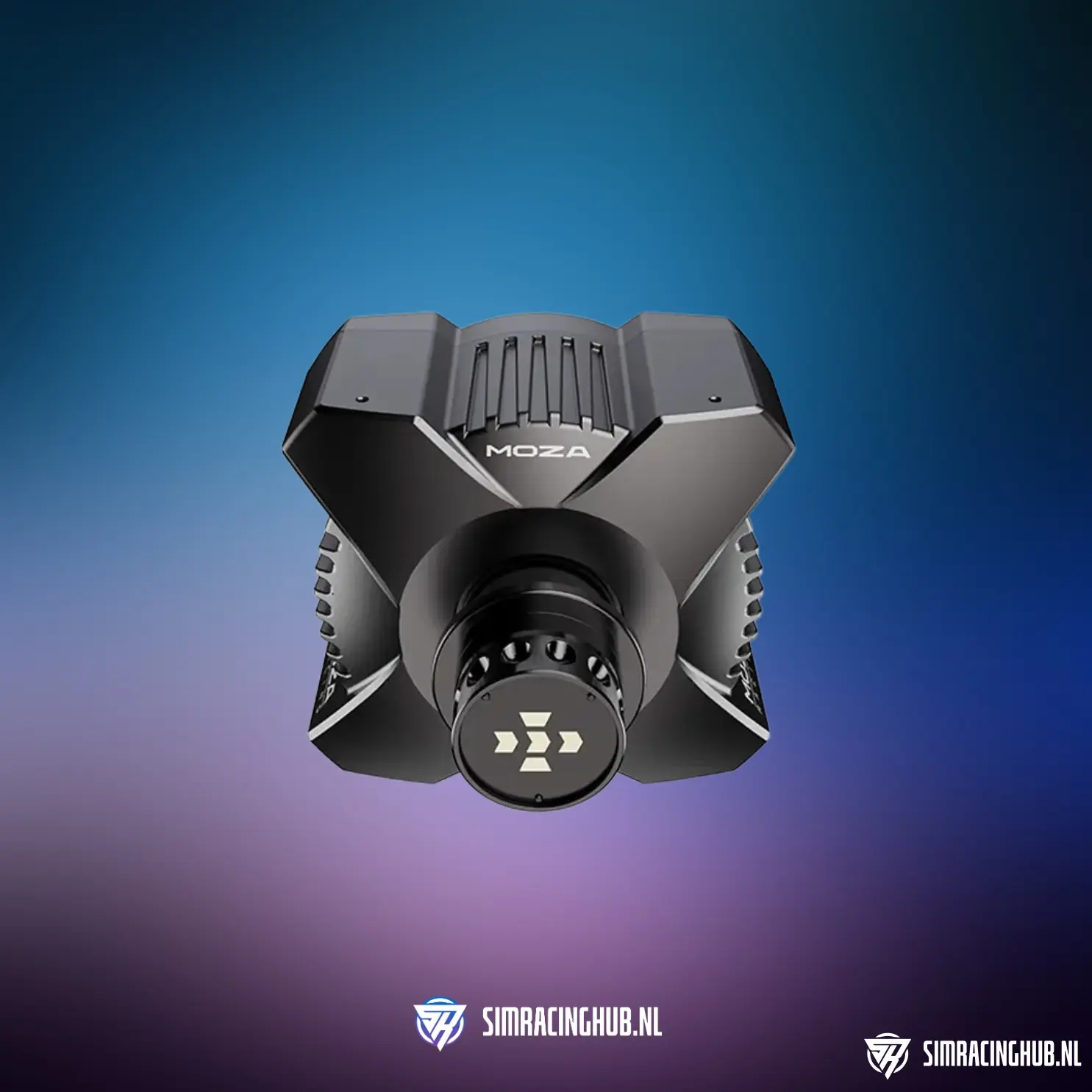
Moza R3 Bundle
- The smartest choice if you ride Xbox or want to get acquainted with direct drive as affordably as possible. Compact, accessible and strong enough as a clear upgrade from Logitech or Thrustmaster.
- Best for PC
Moza R5 Bundle
- The better choice for PC sim racers who want more force feedback margin, more detail and a setup that feels less like an intermediate step. Especially logical if you want to progress later.
FAQ on MOZA R3 vs R5
Is the MOZA R3 good enough for sim racing?
Yes, the MOZA R3 is good enough for novice sim racers, especially if you drive on Xbox or are looking for a compact direct drive setup. The 3.9 Nm torque gives a distinctly cleaner feel than many traditional entry-level wheels. For more serious PC sim racing, it does hit its limit faster than the R5.
Is the MOZA R5 better than the MOZA R3?
Yes, the MOZA R5 is technically and practically the better wheelbase for PC use. With 5.5 Nm torque, it has more margin, more detail retention and less fast clipping. The R3 remains interesting mainly because of its Xbox compatibility and lower entry price.
Will the MOZA R5 work on Xbox?
No, the MOZA R5 bundle is aimed at PC use. If Xbox compatibility is important, you should look at the right MOZA R3 Xbox & PC version. Always check this carefully before buying, as not every R3 variant supports Xbox.
Are the MOZA SR-P Lite pedals any good?
The SR-P Lite pedals are fine to start with, but the brake in particular is limited. Without a performance kit or heavier brake mod, it feels pretty light and linear. For casual use, this is acceptable; for consistent lap times, you'll probably want better pedals or a brake upgrade over time.
Which MOZA bundle should I buy as a beginner?
If you ride on Xbox, choose the MOZA R3 Xbox & PC bundle. If you ride on PC and the R5 fits your budget, choose the MOZA R5. That one will give you more room to grow and stay interesting for longer once you start driving more seriously.
Is 5.5 Nm enough for sim racing?
For many novice and intermediate sim racers, 5.5 Nm is enough, especially in a compact setup or at a desk. It's not high-end, but powerful enough to give much more detail and control than traditional entry-level wheels. If you want heavy GT or formula feedback with lots of reserve, then you better look at a stronger wheelbase.
Is the MOZA R3 better than a Logitech G923?
Yes, the MOZA R3 feels significantly cleaner and more direct than a Logitech G923 due to its direct-drive drive. The difference is not only in power, but mainly in less mechanical noise and a more direct interface with the simulator. The pedals remain a point of interest, though.
Should I buy better pedals or a more powerful wheelbase first?
If you already have a reasonable direct drive base, better pedals often yield more gains for consistency than just more torque. When choosing between R3 and R5, I would choose the right base for your platform and growth path first, but then look pretty quickly at brake feel and montage.

 Nederlands
  Deutsch
  English (UK)
  Français