
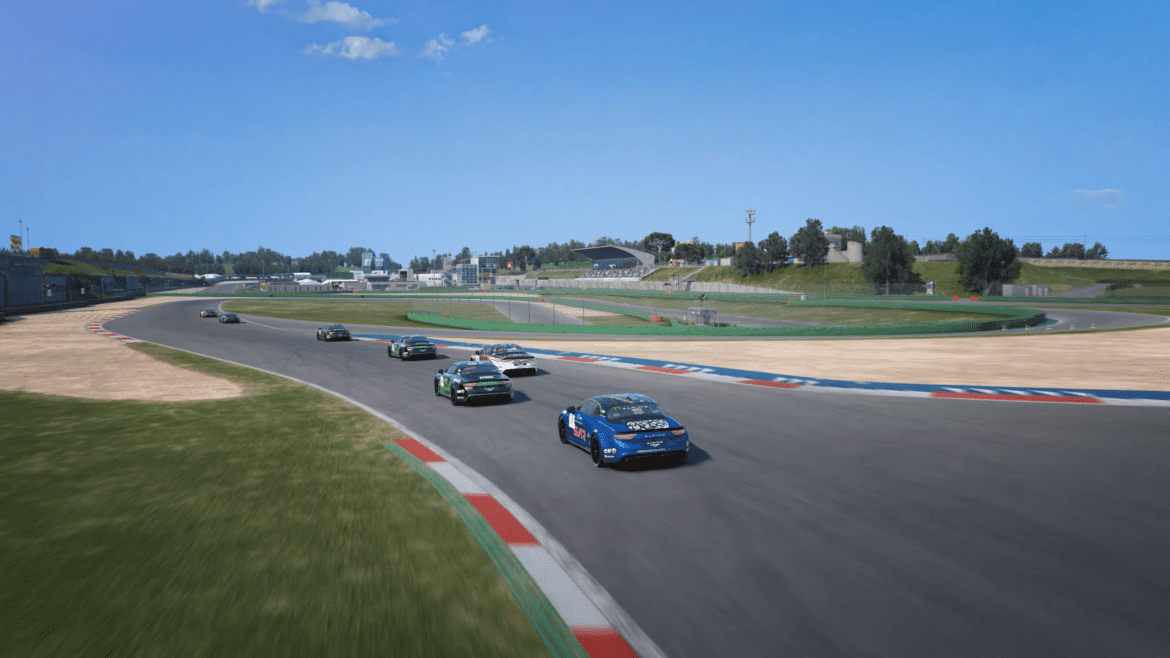
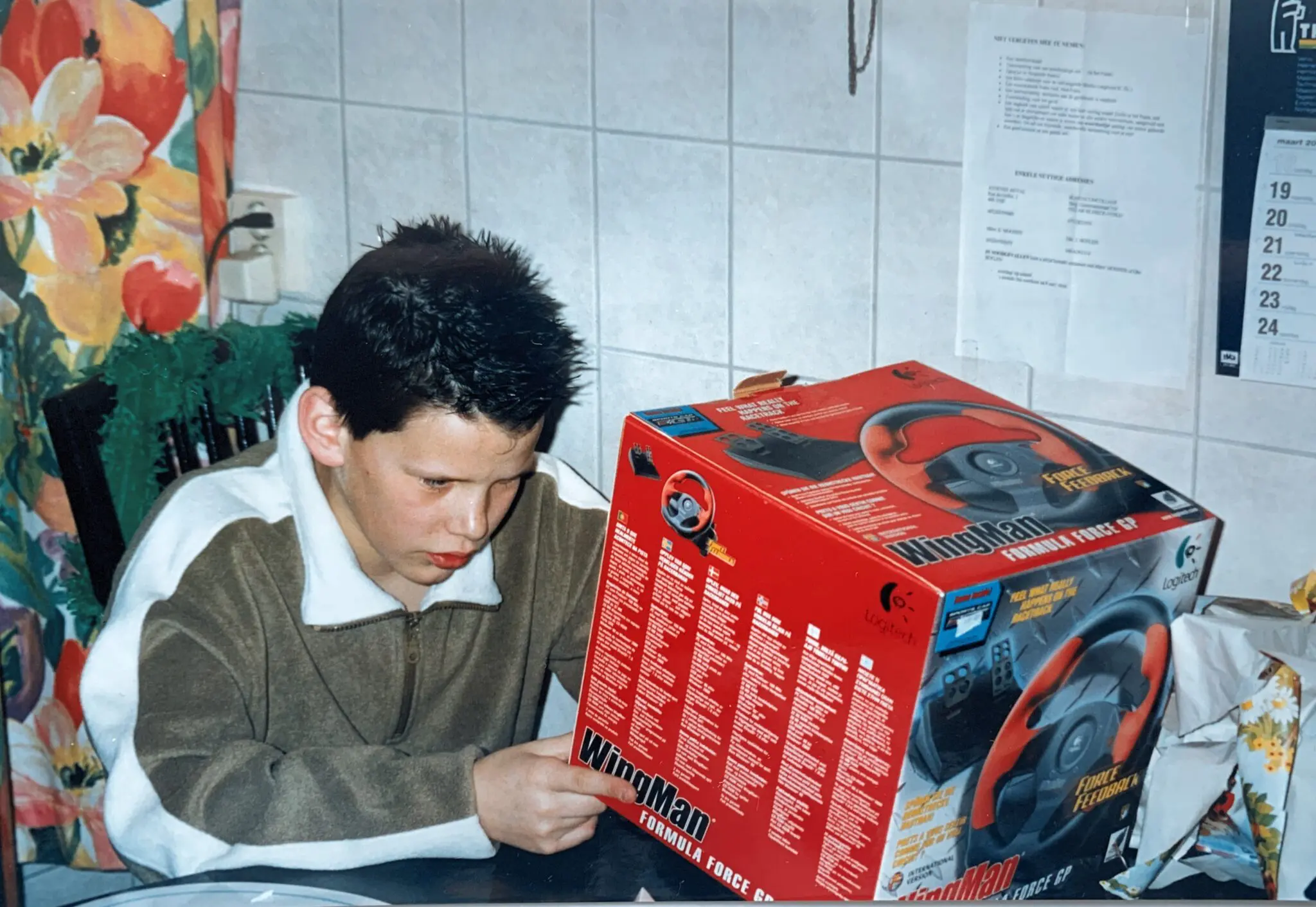
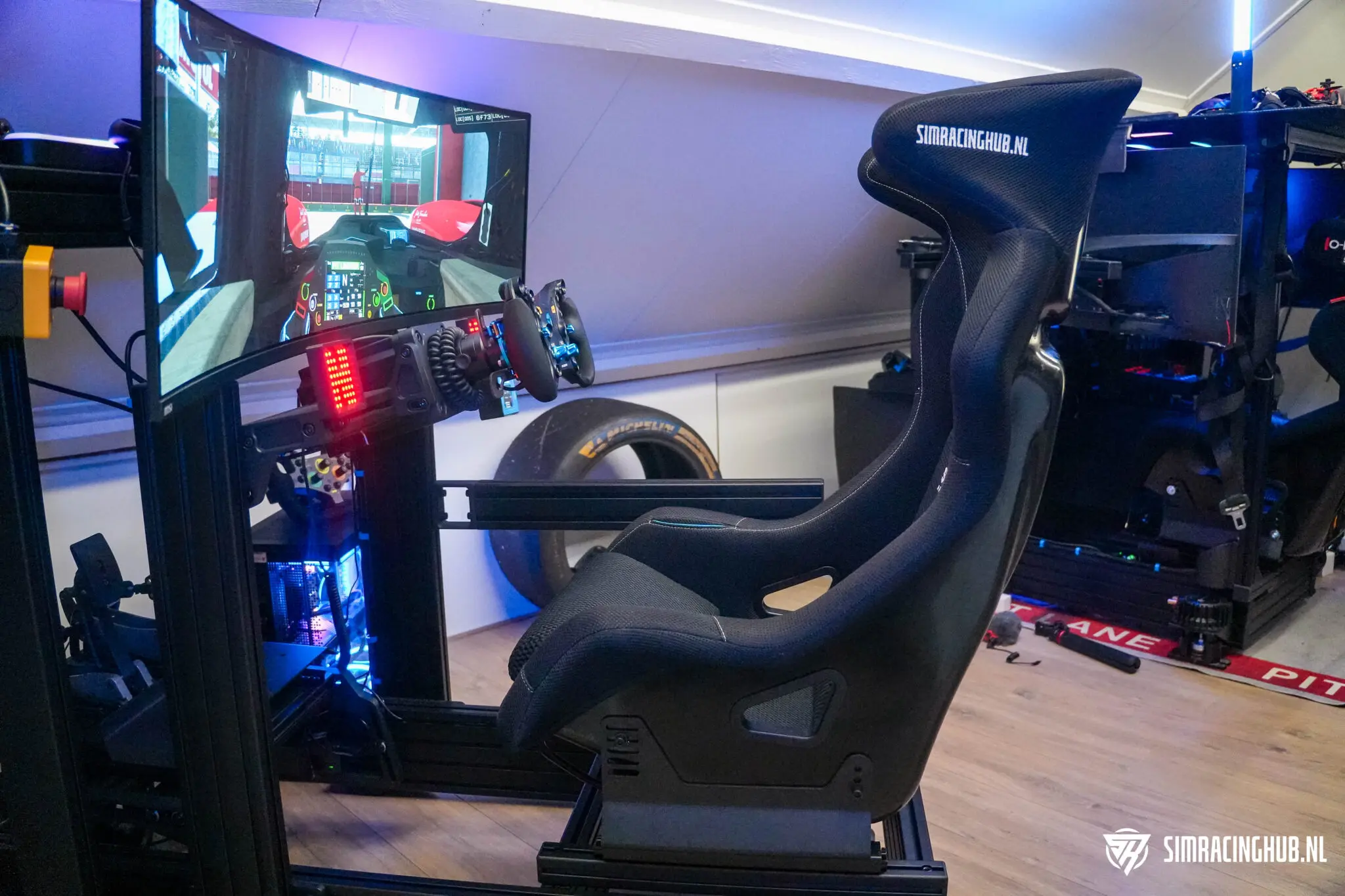
I am Wilco Verhaegh, founder of SimRacingHub.nl. In my attic are two simulators that have been built up layer by layer in recent years: a triple monitor cockpit that pulls you in deep and a motion setup with ultrawide and VR where hardware, visuals, motion and feel come together. That may sound like it all started big, but the opposite is true. My first setup consisted of a cheap Logitech steering wheel, a squeaky desk chair and a screen that was far too small to take seriously.
“Sim racing is about that feeling. That split second when steering in. The adrenaline when you maintain a braking point that is actually too late. The dopamine when a lap is finally right - not just a little, but really right. When everything comes together and you know it even before you see the time.”
I had no mentor, no big budget and no roadmap. What I did have was the need to understand how to do things better. One day I wanted to build a sim racing setup that not only looked impressive, but above all felt realistic. A setup where everything was right: the position, the brake pressure, the picture, the feedback and the feeling that you are really in the car. Underneath it all was an even bigger dream: to one day step into real racing myself. Not as a fantasy, but as a question that became more and more concrete. What do you need for that? What skills do you take away from sim racing? Where does hardware really help you progress, and where do you mainly need to improve yourself?
Those questions have never gone away. Why does one setup feel more natural than another? Why does a pedal angle sometimes make more difference than an expensive upgrade? When do you buy real improvement and when do you buy mostly promise? Twenty years later, those questions still form the basis of how I build, test, ride and write.
Why I built SimRacingHub
SimRacingHub was born out of what I myself had wanted to find when I started: a place where someone doesn't just repeat specifications, but honestly explains what something means in practice. No press release disguised as review, no recommendation that comes in handy mainly because there's commission in return, and no list of technical data where, after reading, you still don't know if a product fits your setup.
“Sim racing is my passion. And I share that passion and enthusiasm on my platform. And SimRacingHub is my way of bringing out the world created in my attic.”
I write reviews because ultimately you have to make a decision. Sometimes it is a steering wheel of a few hundred euros, sometimes a complete cockpit, VR headset or motion setup. Then you want to know not only what the manufacturer promises, but especially what you notice when you drive it. I have made plenty of mistakes myself: bought parts that sounded logical but added little, made upgrades that made less difference than hoped for and reassembled, moved or replaced hardware because it just didn't work out in practice. I include that experience in everything I publish on SimRacingHub.

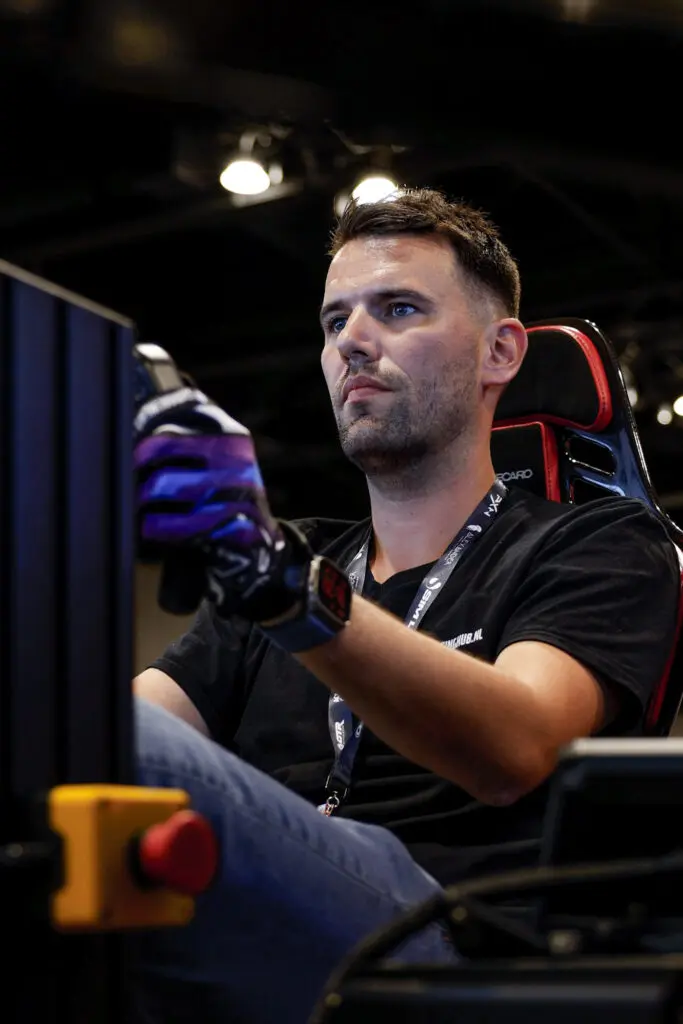
My attic is my test lab
My simulators are not a setting for content, but the reference point from which I judge products. There, I notice whether a steering wheel remains comfortable after longer sessions, whether a pedal set gives you confidence under pressure, whether a cockpit only looks solid or actually remains quiet when you brake hard. It is the small details that often make the difference: a pedal angle that is finally right, a screen position that makes you ride more quietly, a bracket that is ergonomically just right or a rig that no longer transmits movement when you hit the brakes hard.
That's why I look at hardware differently than just from specifications. A product should not just sound impressive; it should solve something in a real setup. It has to contribute to control, comfort, consistency, experience or trust. If it doesn't, then it matters little how strong the marketing copy is.
The car does not lie
Sim racing, to me, is the fairest mirror there is. The car doesn't lie, the telemetry doesn't lie and the lap time doesn't lie. You can point to the setup, the tyres, the car or bad luck. Sometimes that is justified, but in the end, the screen mostly shows what you are doing. Not what you meant, not what you hoped for, but what actually happened.
That makes sim racing sometimes confrontational, but valuable for that very reason. In the cockpit, I learn to keep calm when the pressure is on, analyse a mistake without getting stuck in it and become sharper by feeling better instead of pushing harder. If I want too much, I often lose exactly the speed I am looking for. If I am restless, the car gets restless. That lesson keeps coming back, both in my own driving and in how I look at hardware. A good upgrade doesn't help you by magic, but by providing better feedback, more confidence or removing a limitation in your setup. You still have to do the rest yourself. That's exactly the distinction I try to make clear in my reviews.
What I learned along real circuits
I have not seen motorsport only from a screen. As motorsport photographer I stood along real circuits, close to cars, teams and moments when everything comes together or goes wrong. There you see how thin the line is between control and error, how drivers deal with pressure and how unromantic racing sometimes is when material, budget, timing and concentration have to be right at the same time.
What has always stayed with me is that after a mistake, the best riders do not become busier, but calmer. Not indifferent, but more analytical. They look at what happened, adjust and go again. I try to take that mentality into my own driving, my reviews and the way I continue to build SimRacingHub.
Building an esports team
The idea of building my own team has actually been in me for a long time. I was sim racing back in the days when the internet was just emerging and online racing was anything but self-evident. At that time, I organised one of the first sim racing leagues in the Netherlands, with races in F1 Challenge and later rFactor 1, among others. It was technically cumbersome, messy and far from perfect, but that was exactly where the charm lay. You didn't just build a league, you built a community.
That thought has never really left me. Having my own team, working towards something together, making drivers better, providing structure and building something bigger than one single race: that has always appealed to me. Unfortunately, I no longer have the time to actively do this myself in the same way I used to. But my heart still lies there. Not just in driving myself, but in building something.

That's why I want to build an esports team alongside my own move towards the circuit. Not from the idea that you will be next to the absolute top tomorrow, but rather from the question of how to build the route there in a smarter and more realistic way. There are plenty of sim racers with speed and ambition, but without a clear structure. They drive good times, maybe win races, but don't always know how to develop themselves further, work better together or perform more consistently under pressure.
I want to build something for that: an environment where talent not only gets faster, but also learns to analyse, communicate, collaborate and grow as a racer. That fits with SimRacingHub because my interest has never been only in products. Hardware is important, but ultimately it's also about development, structure, mentality and the feeling of building something together.
From screen to circuit
The next step for me is to further explore the route from simulator to real track. Not as a romantic success story, nor with the claim that sim racing is the same as real racing, because it is not. But I do want to show honestly what you take away from years of sim racing experience, what disappoints once you drive for real and what such a step requires practically, financially and mentally.
Therein lies an interesting layer for me, because sooner or later many sim racers feel the same question: could I do this too? I don't want to answer that question with pretty pictures or easy promises, but with an honest account of the route. Including costs, doubts, preparation, mistakes and everything less beautiful than it looks on Instagram. If you too are wondering if you could do this - then this story is for you too.
What you get from me
I'm not going to tell you that every upgrade is necessary or that one product will suddenly make you faster. What I do do is show you where the difference is. What details I notice, what choices I would make myself, what I get excited about, what annoys me and when I think it's better not to buy anything for a while. Sometimes a product is good, but doesn't make sense for your setup. Sometimes you mainly buy more experience and not directly more speed. Sometimes the problem is not in your hardware, but in your technique. And sometimes an expensive upgrade is exactly the step you need. That distinction requires an honest look, not quick conclusions. That's the way I want to keep making SimRacingHub.
Any review on SimRacingHub is based on real driving experience. Not one weekend, but weeks. Not one setup, but compared to what I know. I write about my personal experiences. What do I like? But more importantly, what I don't like. The reviews are substantive and in-depth. That's a choice. Sim racing hardware is complex, the market is expensive and a bad purchase hurts. You can only spend your money once. That's why I only share my honest opinion.

Transparency
Some articles on SimRacingHub contain affiliate links. If you buy something through such a link, I can receive a commission at no extra cost to you. That makes it possible for me to continue putting time, money and energy into the platform, but it doesn't change my judgement. If something doesn't make sense, I write that. If something is good but too expensive, I write that too. I'd rather you click one less time and come back later because you trust me, than buy something once based on a story that is too nicely crafted.
What SimRacingHub is to me
SimRacingHub is not finished. It grows with what I build, drive and learn. And if you are at that same crossroads - getting better, getting further, or just knowing what your money is worth - then you have come to the right place.
Wilco Verhaegh
Founder of SimRacingHub.co.uk
 Nederlands
  Deutsch
  English (UK)
  Français